Vitamin to help memory and focus is a phrase many Malaysian parents search when a child seems forgetful, distracted, or tired after school. A healthy diet matters, but learning progress usually comes from the daily pattern around the child: sleep, routine, attention practice, recall practice, and warm support.
At Genius Mind Academy, we keep the conversation educational and practical. We do not promise that a product will fix memory. Instead, parents can use simple routines that support focus, comprehension, confidence, and better learning habits.

Vitamin to Help Memory and Focus: 6 Safe Learning Habits for Kids
These six habits match the number in the headline. They help parents turn the search for support into routines children can actually repeat during school weeks, tuition days, and exam revision.
1. Start with food, water, and a calm table
Before adding more revision, check the basics. A child who is hungry, thirsty, or rushing from one activity to another may struggle to listen and remember. Keep snacks simple, keep water nearby, and begin study time with one clear task.
Parents do not need to turn this into a strict checklist. Notice the patterns that affect your child most: arriving home exhausted, skipping a snack, studying in a noisy space, or starting homework too late. When the routine is calmer, children often have more energy to listen, organise ideas, and try again after a mistake.
2. Use active recall after reading
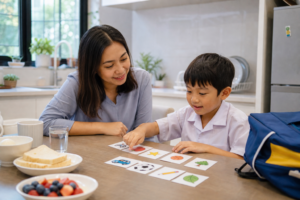
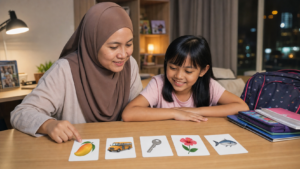
Reading the same page again is comfortable, but recall builds stronger learning. Ask your child to close the book and say three points aloud. This makes vitamin to help memory and focus a safer, habit-based topic instead of a quick-fix promise.

3. Protect sleep before adding more work
Tired children often look careless when their attention is simply low. The Sleep Foundation explains that age-appropriate sleep supports daytime functioning. A steady bedtime can make memory practice feel easier than another late-night worksheet.
4. Add movement breaks between tasks
A short stretch, wall push, or walk to get water can reset attention. Keep it brief and predictable, then return to one question or one paragraph. Movement is not a reward for finishing everything; it is part of helping the brain get ready.

5. Group facts into clear patterns
Children remember better when facts are organised. Group vocabulary by sound, science facts by topic, or instructions by first, next, and last. Parents can also explore memory exercises for more practical ways to make recall visual and structured.
6. Get guidance when routines are hard to keep
If home practice turns into arguments, outside structure can help. The Harvard Center on the Developing Child connects working memory with broader executive function skills such as planning and self-control. Guided practice gives children a fair process to follow.

For parents comparing options, vitamin to help memory and focus should not mean chasing a supplement claim. It can mean asking: is my child rested, clear about the task, practising recall, and receiving calm feedback?
Families who want structured learning support can visit Genius Mind Academy, read about improving memory and focus, or explore the 90min Brain Activation Class and memoHACK Trial Class. Start with two habits this week, keep the mood warm, and let progress build from repeatable routines.