ways to improve working memory was the phrase I wrote in my 24 August 2026 content note after a familiar Subang Jaya parent question: “Why can my child understand the example, then forget the steps two minutes later?” I am using a privacy-safe composite I call Mei Lin, a Standard 4 child who speaks English at school, Mandarin with grandparents, and Malay during daily life.
This article was written with the assistance of an AI writing program to help organize information clearly. This image was created using an AI image creation program. Mei Lin is an anonymized composite; the public Genius Mind Academy feedback I can verify is May Lee and Mr. Chow on the public parent testimonial page, Brunei student sharing on the public student testimonial page, and the Genius Mind Academy’s learning approach. I am not inventing private scores, diagnoses, or miracle outcomes.

Ways to Improve Working Memory: 7 Positive Routines for Kids
When parents ask about ways to improve working memory, I usually begin with the school-night scene, not a theory. A child may need to hold a spelling sound, a BM instruction, and the next maths step at the same time. The Harvard Center guide to executive function describes working memory as part of executive function, and the Retrieval Practice guide explains why bringing ideas back to mind is stronger than just rereading.
The Malaysian pressure is real. Some parents still say UPSR or PT3 when they describe exam worries, while older siblings may already be looking at SPM, which the Malaysia government education portal places within the national education pathway. In that setting, a small missed step can feel bigger than it is. My lesson from parent conversations is to make the task visible before asking for more effort.
At Genius Mind Academy, we support focus, memory, comprehension, confidence, and learning habits through structured practice. Families can explore Genius Mind Memory Games, the 90-minute Brain Activation Class, and the memoHACK Trial Class page. Still, a home routine must be kind enough for a tired child after traffic, tuition, dinner, and one more school notice.
1. Start ways to improve working memory with five picture cards
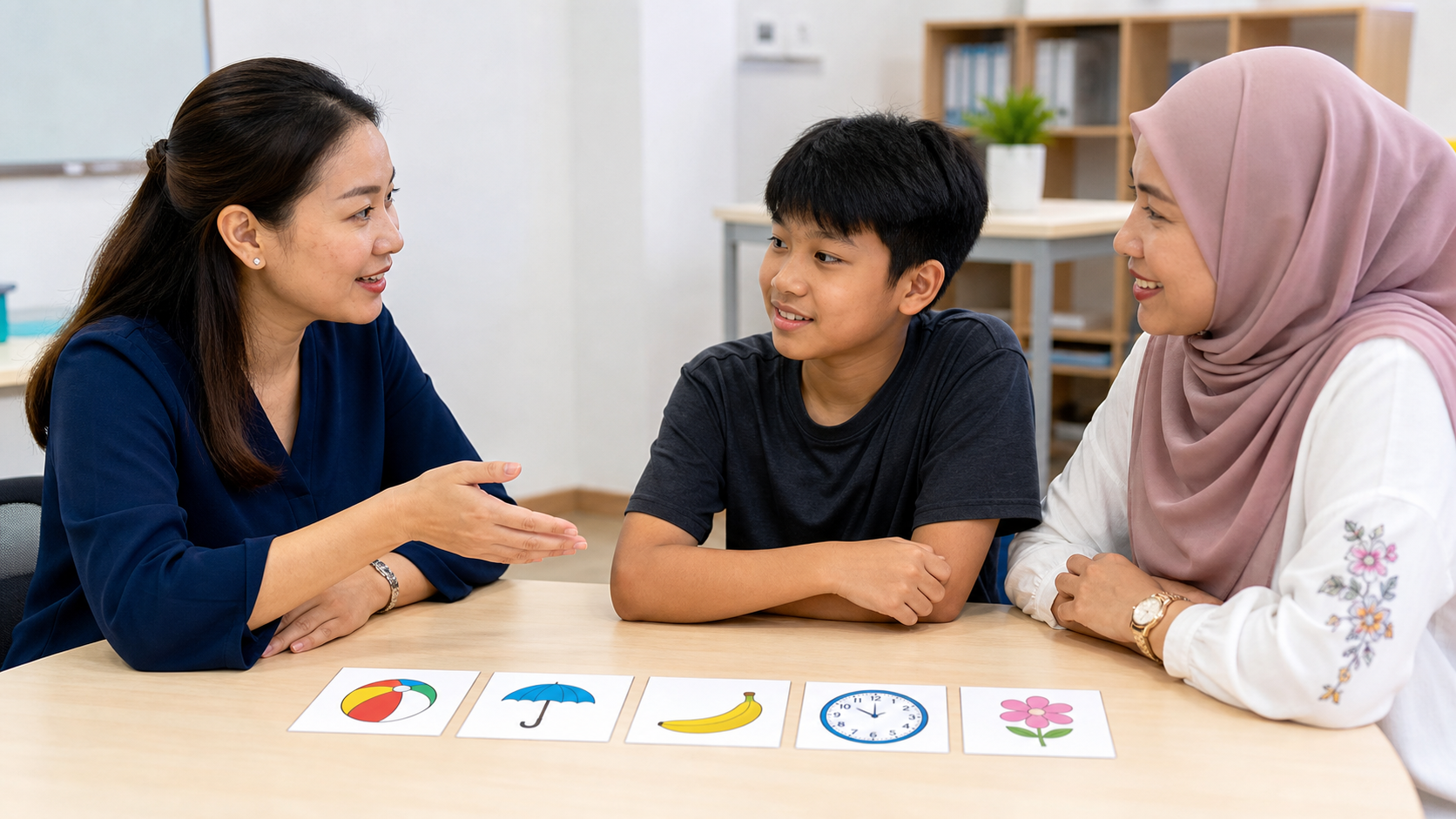
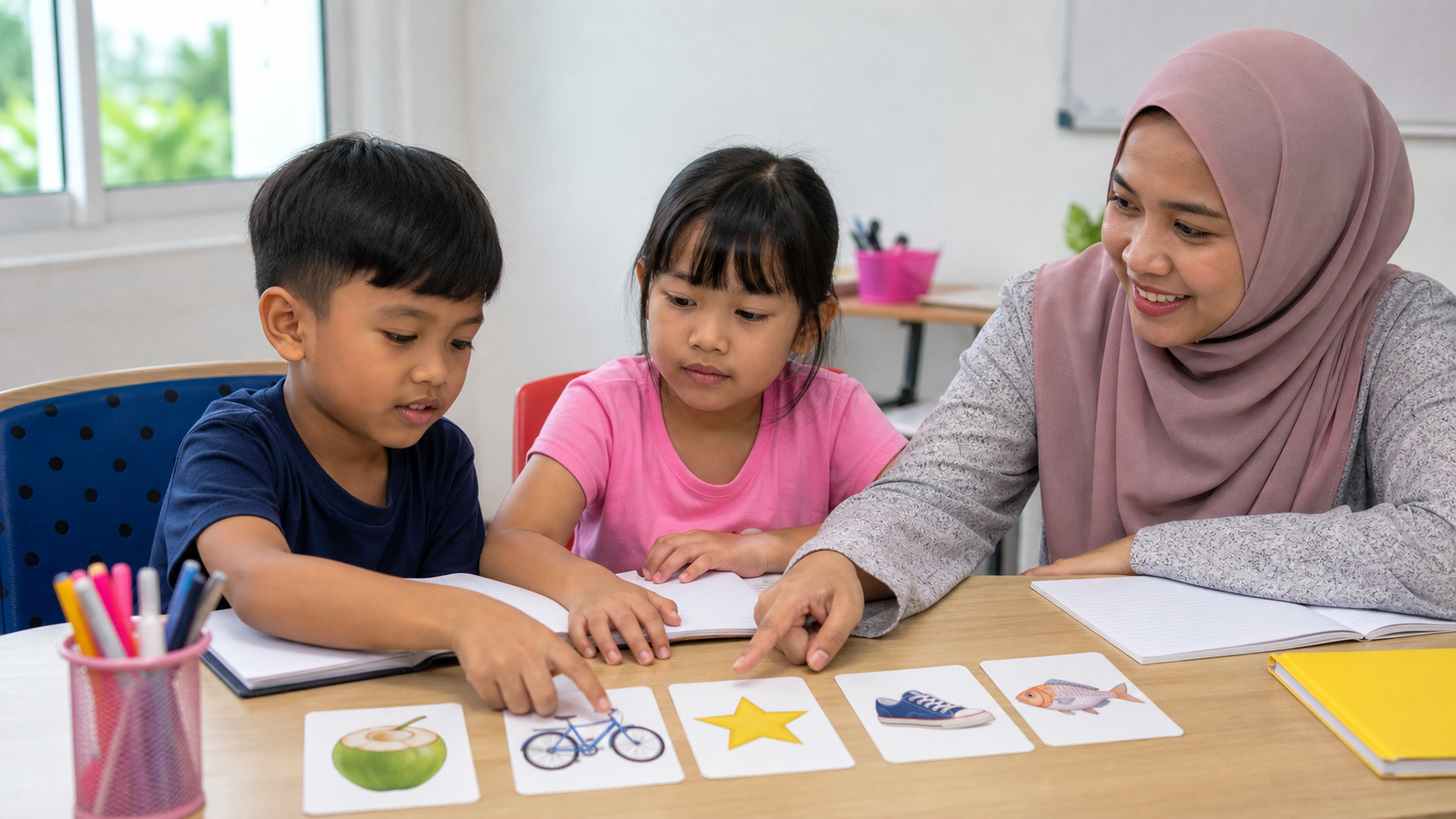
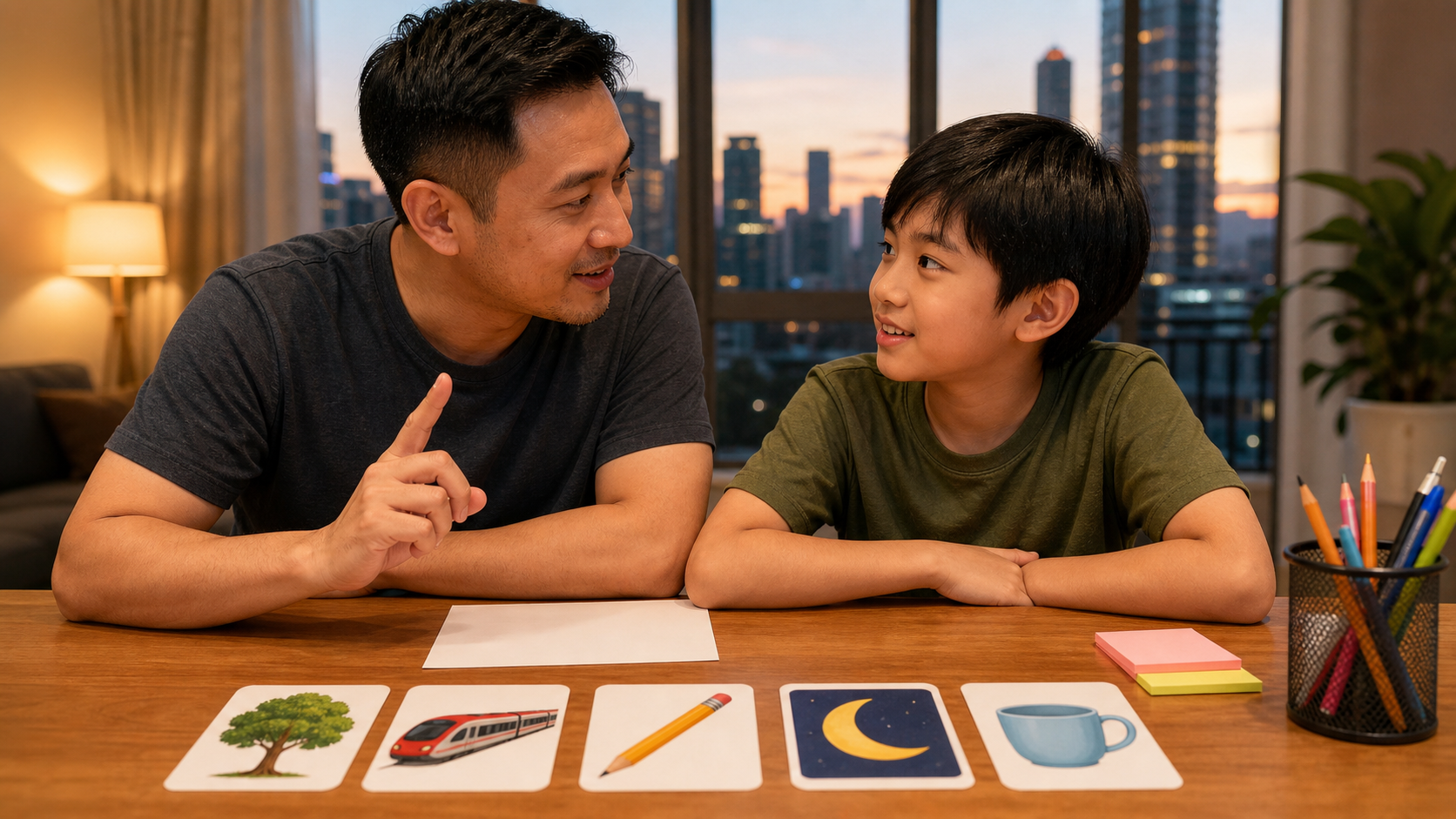
For ways to improve working memory, five picture cards are enough. Show mango, bus, key, flower, and fish for thirty seconds. Cover them, then ask the child to rebuild the order. If Mei Lin remembers three, name the three first. Confidence often returns before accuracy does.
2. Turn the order into a small story
A story gives the mind a path. Mei Lin laughed when we imagined the mango riding the bus, finding a key, opening a garden gate, and seeing a fish pond. The story was silly, but it reduced the blank feeling that appears when a child is told only to concentrate harder.
3. Use one instruction at a time
A working-memory load grows quickly when adults stack instructions. Instead of “read, underline, answer, and check,” try “read the first sentence and tell me the main idea.” After that, add the next step. This is not lowering expectations. It is giving the child a stable handle.
4. Let bilingual meaning come first
The UNESCO multilingual education guidance reminds educators that children learn best through a language they understand. In Malaysia, that may mean a Malay explanation before an English answer, or a Mandarin phrase that helps a child catch the idea. I would rather hear meaning in home language first than polished words copied without understanding.
5. Add movement without making it noisy
The WHO physical activity fact sheet frames physical activity as part of well-being. For learning, movement can be small: stand, touch the first card, say it, sit, then recall. Children who fidget are not always avoiding learning. Sometimes the body needs a calmer route back into attention.
6. Protect sleep before the final round
The CDC sleep guidance connects sleep with learning readiness. I have seen parents push one last round because the first five were finally improving. The gentler choice is to stop while the child can still leave the table feeling capable. Tomorrow’s focus depends on tonight’s finish.
7. Write one confidence note
A parent note can be short: “Mei Lin held four cards,” “she explained in Malay first,” or “she asked for one clue instead of giving up.” These lines are not report cards. They are evidence that attention, recall, and comprehension are becoming habits.
If ways to improve working memory brought you here, begin with five clear pictures and one calm voice. Parents who want guided support can contact Genius Mind Academy through the contact page.