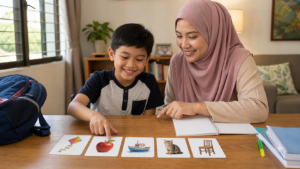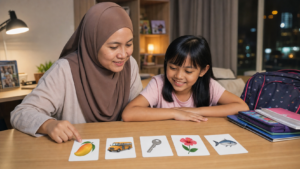
sharpen your memory was the phrase I chose for my second 24 August 2026 note because it sounds like a parent whispering into a phone after homework has gone badly. I am using a privacy-safe composite I call Arif, a Year 6 boy in Petaling Jaya who could remember football lineups but lost his karangan points when the page looked crowded.
This article was written with the assistance of an AI writing program to help organize information clearly. This image was created using an AI image creation program. Arif is an anonymized composite; the public Genius Mind Academy feedback I can point to is May Lee and Mr. Chow on the public parent testimonial page, Brunei student voices on the public student testimonial page, and the Genius Mind Academy’s learning approach. I will not turn public praise into hidden private claims.
Sharpen Your Memory: 7 Calm Habits for Malaysian Families
When a parent asks how to sharpen your memory, I hear the worry underneath: “My child is bright, so why does revision disappear?” Memory is not built by panic. It grows when a child pays attention, makes meaning, retrieves the idea, and tries again. The Retrieval Practice guide is useful here because it explains active recall in plain learning terms.
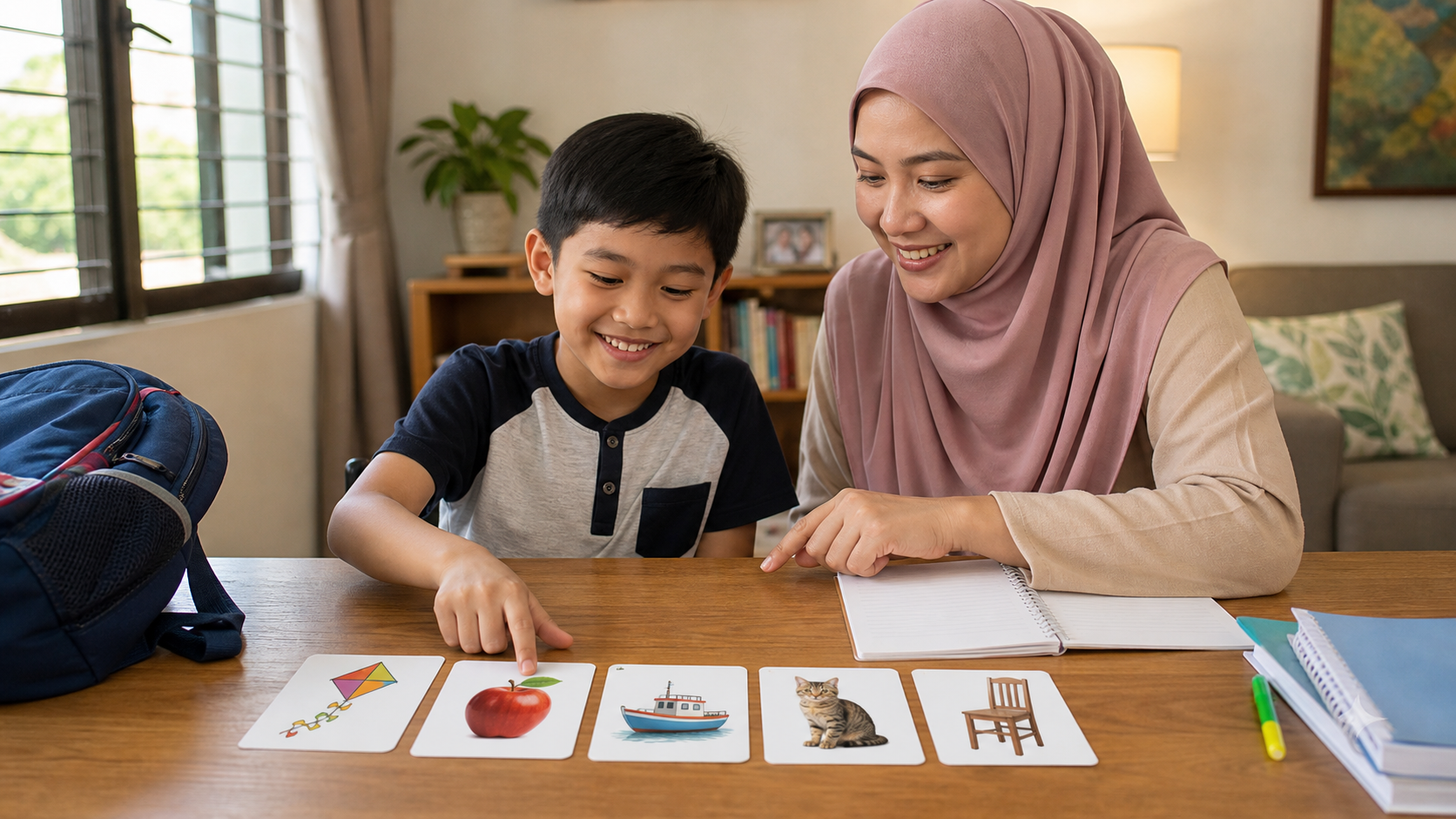
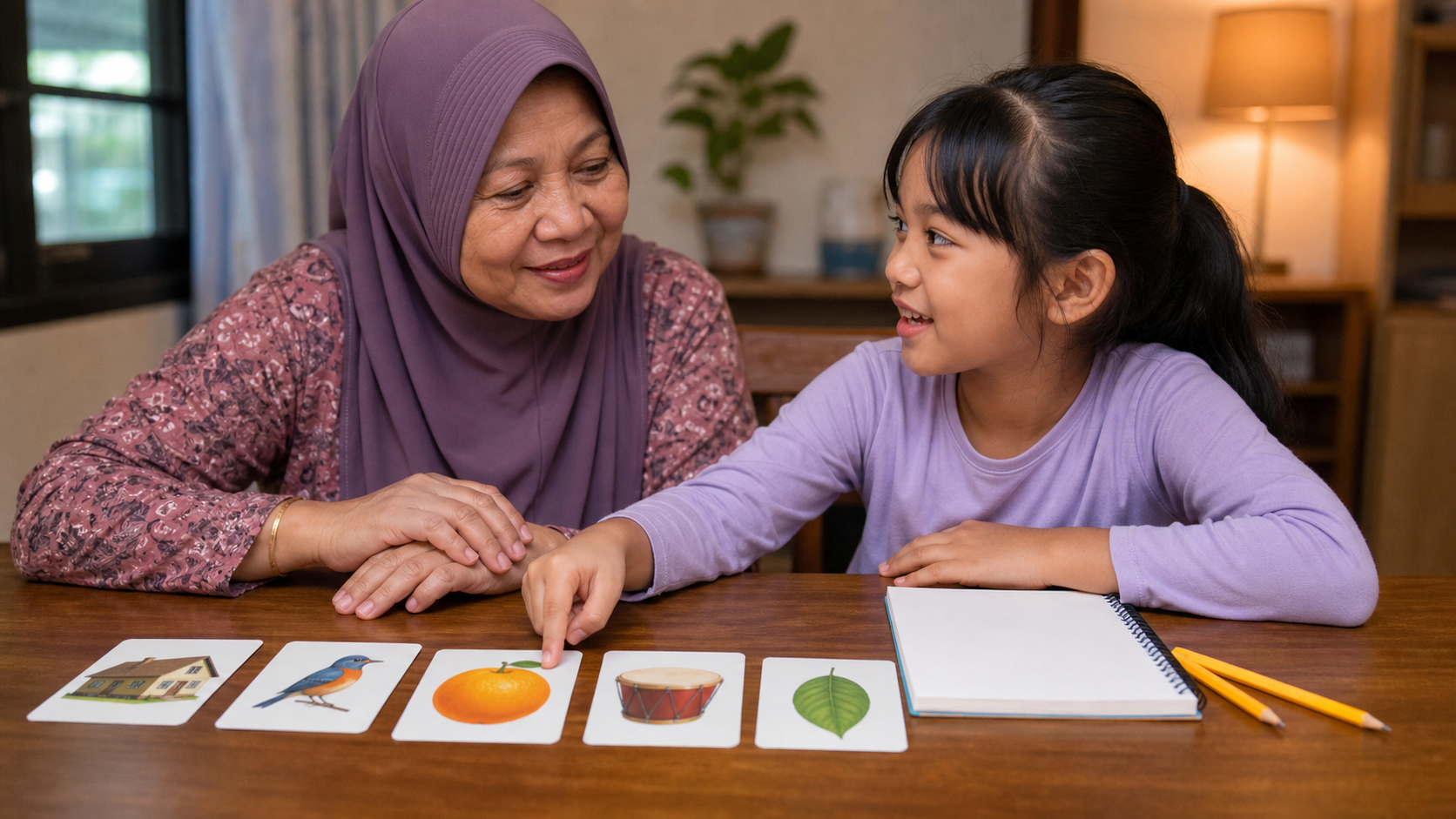
Arif’s mother first tried longer copying sessions. More pages did not create calmer recall. The better evening started with five picture cards, two remembered points, and a short explain-back in whichever language helped him think. That shift matters in Malaysian homes where English, Malay, Mandarin, Tamil, and dialects may all appear around one table.
Genius Mind Academy supports focus, memory, comprehension, confidence, and learning habits through child-friendly practice. Parents can also look at Genius Mind Memory Games, the 90-minute Brain Activation Class, and the memoHACK Trial Class page. Home practice still has to fit real life: dinner smells from the kitchen, siblings interrupting, traffic fatigue, and an older cousin talking about SPM.
1. Sharpen your memory with one tiny sequence
To sharpen your memory, start with one tiny sequence: kite, apple, boat, cat, and chair. Let the child look, cover, recall, and check. If Arif remembers three, his mother says, “Three came back clearly.” The correction comes after the success is named.
2. Draw the idea before writing
A picture can lower the fear of a blank page. Before a paragraph, ask for three small sketches or three cards that match the idea. A bus, mango, and bridge can become a story path. The child is not escaping writing; the child is preparing meaning.
3. Ask for two remembered points
After one short note, close the book and ask, “What are two things you remember?” Not ten. Two. This gives parents a fast signal about comprehension and gives the child a fair chance to retrieve instead of stare at the same page again.
4. Use home language as a bridge
The UNESCO multilingual education guidance guidance matters in everyday Malaysian revision. If a child can explain the science idea in Malay first, or use Mandarin to clarify a story sequence, let that meaning arrive. The school-language answer can be shaped after the idea is stable.
5. Let movement reset attention
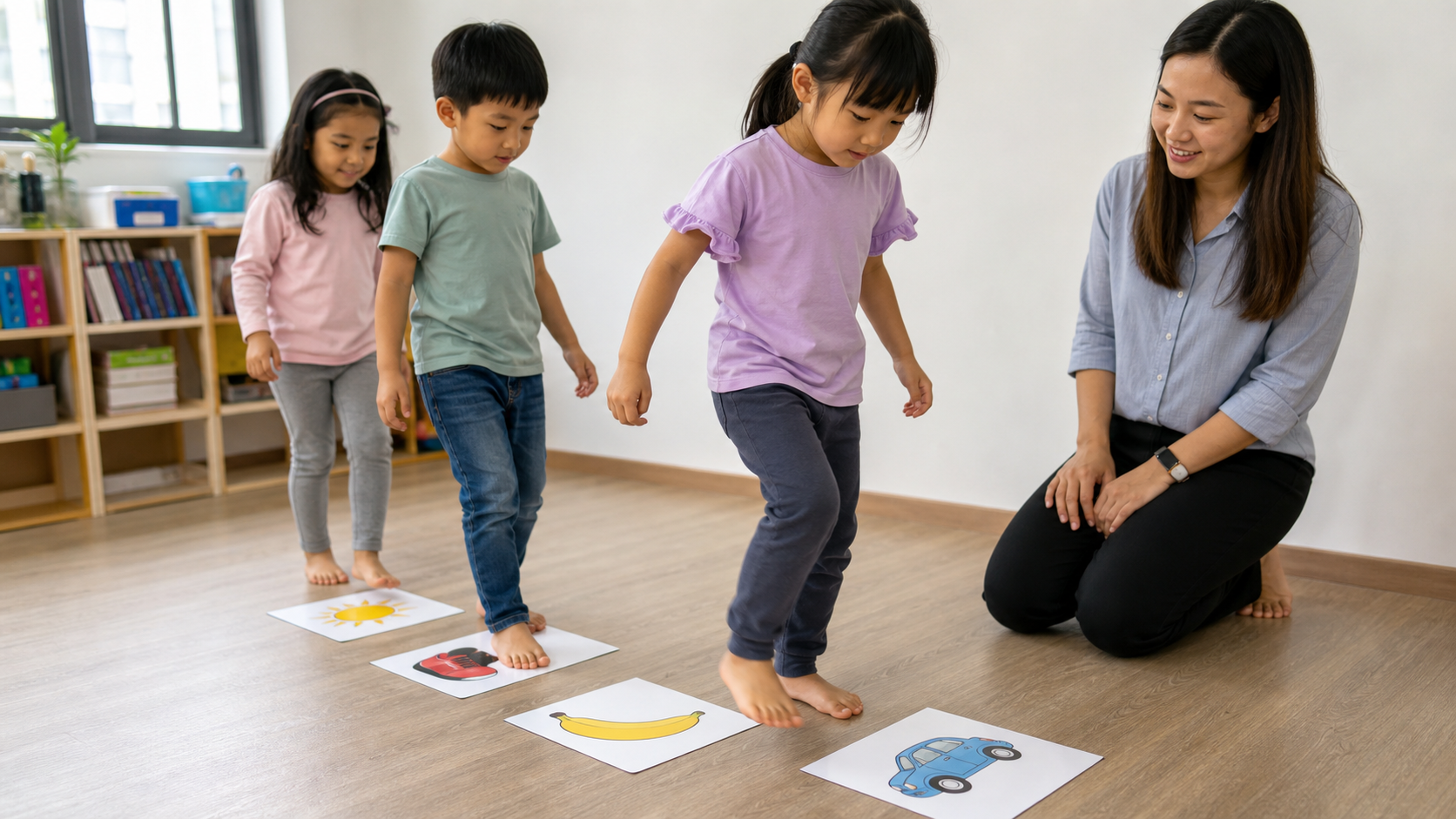
The WHO physical activity fact sheet notes the broader value of physical activity. During revision, movement can be quiet: step to the card, say the picture, step back, breathe. It gives restless energy a job and keeps the task visible.
6. Stop before the night turns sharp
The CDC sleep guidance links sleep with learning readiness. In my parent notes, the most costly homework minutes are often the last angry ones. Stop while the child can still close the book with dignity. Tomorrow’s memory practice will be easier if tonight ends calmly.
7. Keep a three-line parent log
Use three lines: what we practised, what came back, and what felt easier. Arif’s log might say, “Five cards, four correct, less panic.” That is enough. The goal is not a perfect evening; the goal is a child who can return to learning without shame.
If sharpen your memory brought you here, try five picture cards, two remembered points, and one kind closing sentence. Families who want structured help can reach Genius Mind Academy through the contact page.