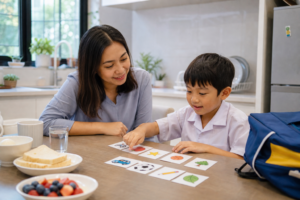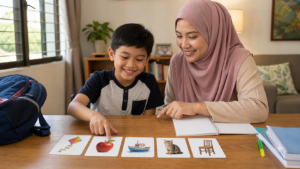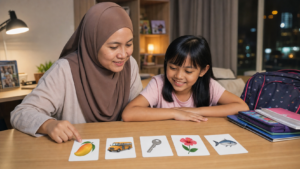
sharpen your brain was the phrase a father used in my July 2026 Petaling Jaya teaching notes after his Primary 6 daughter froze during a comprehension passage. I will call her Jia Xin. She was not weak. She could tell me the whole story verbally in Mandarin, but once the English worksheet appeared, she rushed, guessed, and looked away.
This article was written with the assistance of an AI writing program to help organize information clearly. I am writing from a first-person Genius Mind Academy education voice, using anonymized composite student stories and parent feedback themes rather than private student records.

Sharpen Your Brain With Visible Study Habits
At Genius Mind Academy, I translate sharpen your brain into routines a child can see and repeat. The Genius Mind Academy background describes GMA’s work around memory, concentration, creativity, speed reading, and personality. For Malaysian families, this matters because school life is not one simple language or one simple exam. Children may move between English, Malay, Chinese, tuition notes, school worksheets, and the quiet pressure of SPM years ahead.
The approach is supported by learning evidence, not magic language. The EEF metacognition guidance emphasizes planning, monitoring, and evaluating learning. RetrievalPractice.org explains that remembering improves when students pull ideas from memory. The Learning Scientists retrieval practice guide describe retrieval practice as bringing learned information back to mind, and the World Health Organization physical activity guidance discusses physical activity for children and adolescents, including benefits for cognitive development.
1. Start with a calm first minute
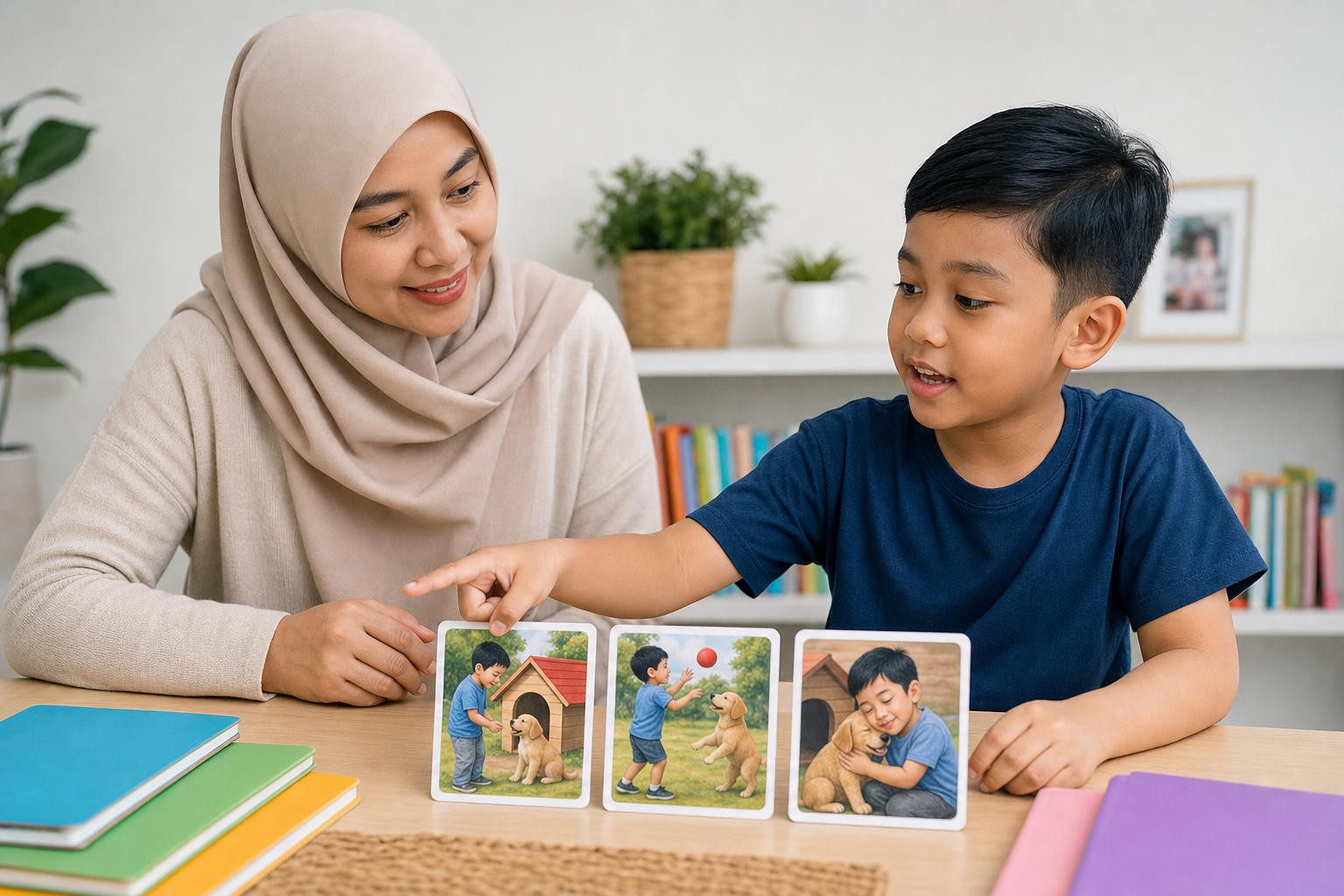
When parents ask how to sharpen your brain, I usually start smaller than they expect. Jia Xin’s first minute was not a worksheet. It was breathing, looking at three picture cards, and naming what she noticed. A calm start tells the child that learning is not a trap.
2. Use picture cards before long notes
Picture cards help children organize meaning before they face a dense page. I gave Jia Xin three story cards: beginning, problem, ending. She arranged them, explained them in Mandarin, then rebuilt the idea in English. That bilingual bridge reduced the fear of the worksheet.
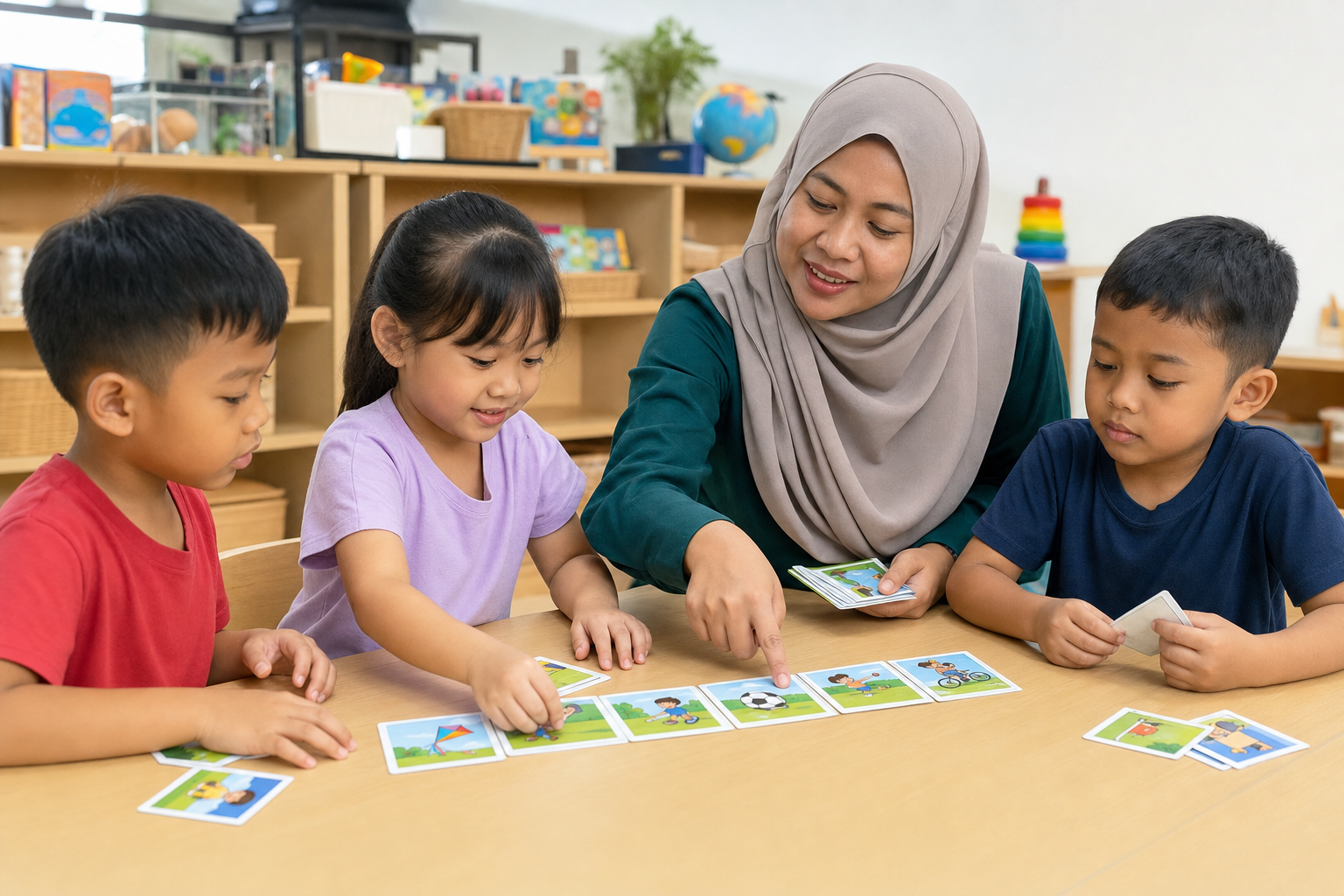
3. Ask for explain-back instead of immediate correction
I used to correct too quickly. It made children quiet. Now I ask, “Show me how you knew.” A sharpen your brain routine should reveal thinking, not just right or wrong answers. When Jia Xin explained her choice, I could hear that she understood the story but missed the question word.
4. Practise retrieval in short rounds
The home version is simple: read a short paragraph, close the book, say three ideas, check, then try again later. No marks are needed. This routine fits Malaysian evenings because it can happen before tuition, after dinner, or while a younger sibling is finishing homework.
I also asked Jia Xin’s father to stop timing every answer for one week. The slower pace helped us hear her reasoning instead of only noticing hesitation.
5. Build a bilingual meaning bridge
Many children think they do not understand when the real problem is language switching. I let them explain in Malay, Chinese, or English first, then we shape the school-language answer. A sharpen your brain habit should respect what the child already understands and help them move it into the answer format required at school.
6. Use movement to sharpen your brain safely
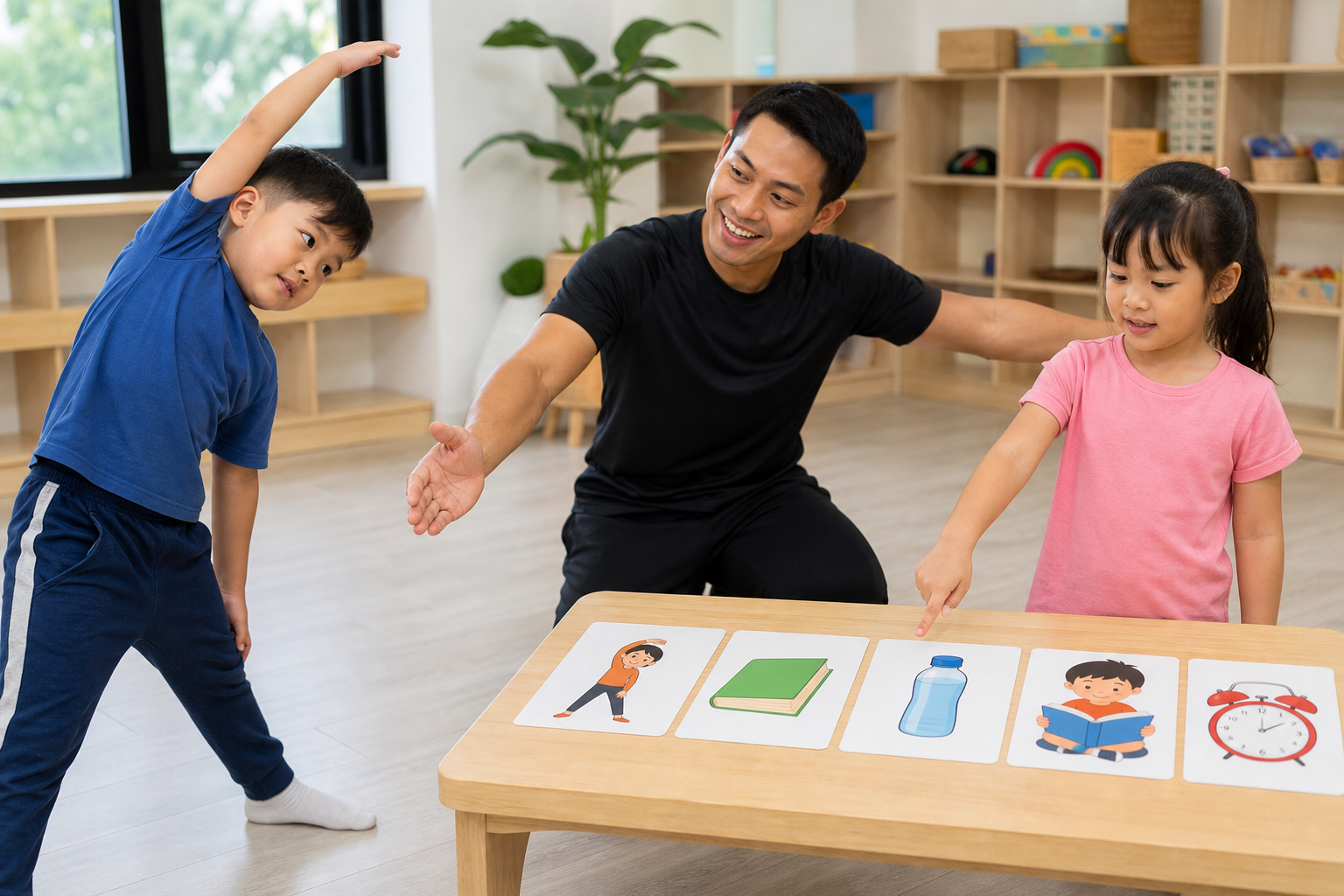
Not every attention problem needs another lecture. Sometimes the child needs to stand, stretch, walk to the door, return, and recall one idea. The movement is short and purposeful. It gives the body a reset so the mind can return to the task with less resistance.
7. End with one confidence sentence
At the end, I asked Jia Xin to finish this sentence: “Today I checked…” She said, “I checked the question word before choosing.” Her father later shared parent feedback that she still needed reminders, but she stopped saying “I cannot” before every passage. Families can explore the Brain Activation Class, memoHACK Trial Class page, memory exercises guide, memory and focus guide, and GMA parent testimonial page. If your child needs a kinder way to sharpen your brain, contact Genius Mind Academy through the GMA Petaling Jaya contact page.