exercises for brain and memory was the phrase I wrote on a July 22, 2026 GMA teaching note from Petaling Jaya. I will call the child Ryan, an anonymized Standard 4 learner who could retell football scores but lost the order of four Science facts after school. His mother looked embarrassed when she said, “Maybe he is just careless.” I have heard that worry often, and I try to slow the moment down.
This article was written with the assistance of an AI writing program to help organize information clearly. I am writing from a first-person Genius Mind Academy education voice, using anonymized teaching details and recurring parent feedback themes so no private child or family is exposed.
Exercises for Brain and Memory: 7 Positive Home Routines
At GMA, exercises for brain and memory are not about making a child study harder until everyone is tired. The GMA background explains our education focus on memory, concentration, creativity, speed reading, and personality. In class, I look for one practical change: can the child notice, connect, recall, explain, check, and try again with less fear?
The evidence I use stays close to classrooms. The EEF metacognition guidance highlights planning, monitoring, and evaluating learning. RetrievalPractice.org explains retrieval practice as pulling information from memory, while the Learning Scientists retrieval practice guide gives parent-friendly examples. I also keep the CDC student sleep guidance and World Health Organization physical activity guidance in mind because sleep and movement affect whether a child is ready to focus before memory practice begins.
Ryan’s parent feedback theme was simple: “He knows it when I sit beside him, but he forgets when I cover the page.” In many Malaysian homes, that sentence appears after a long day of Sekolah Kebangsaan or Chinese school, homework, tuition, bilingual reading, and SPM pressure from older siblings. The child needs a repeatable routine, not a louder reminder.
1. Start with four picture cards
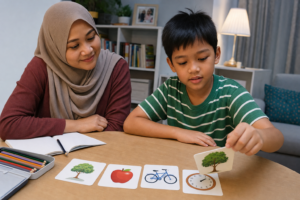
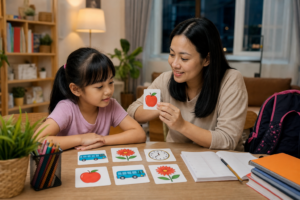
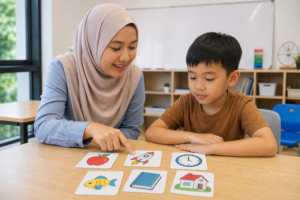
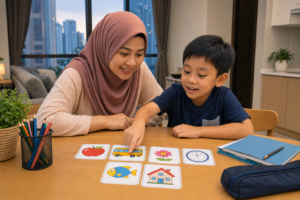
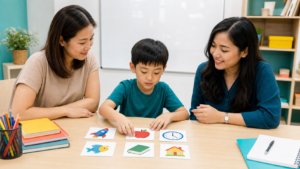
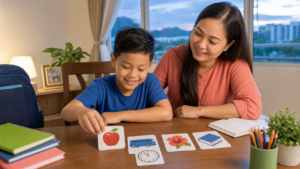
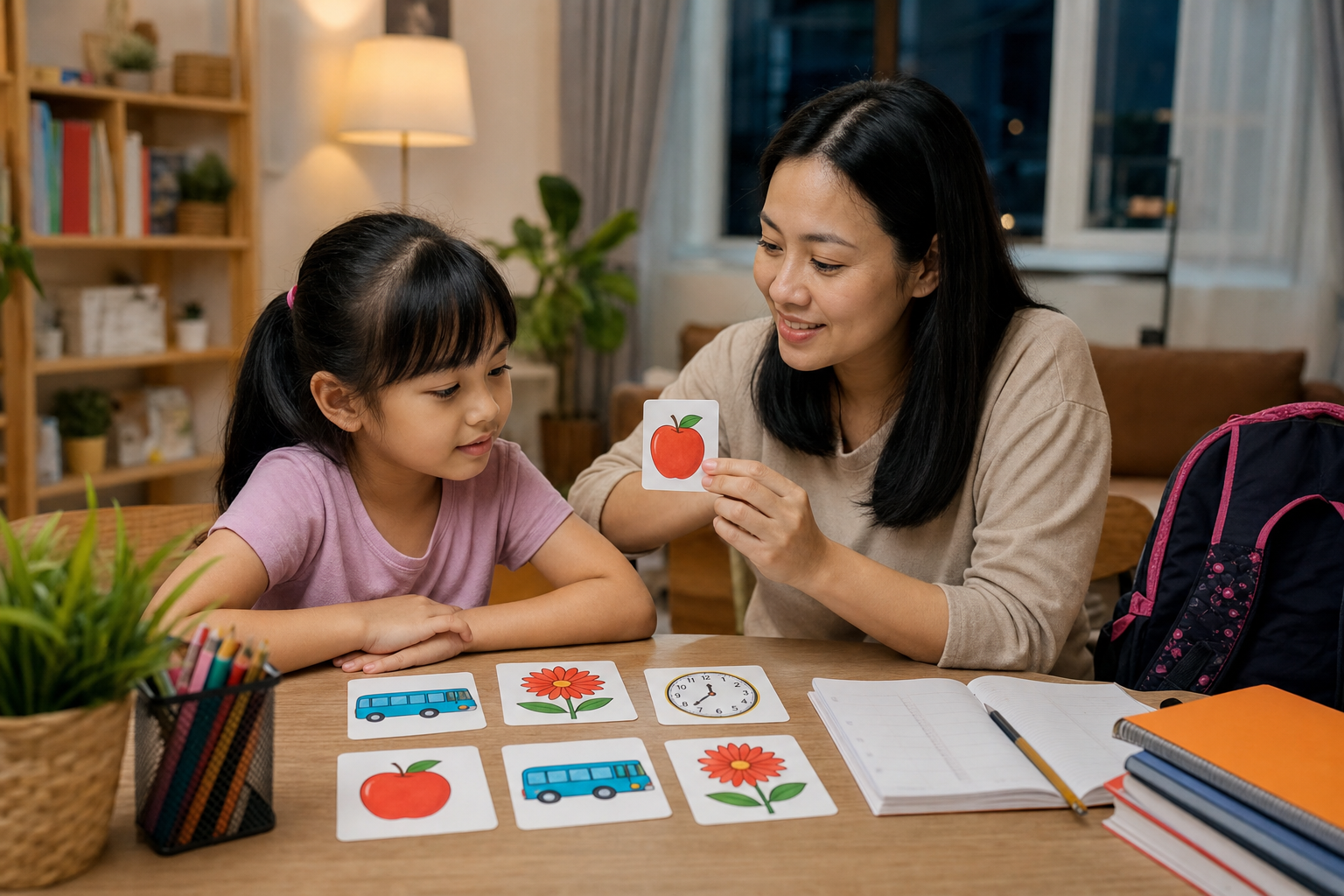
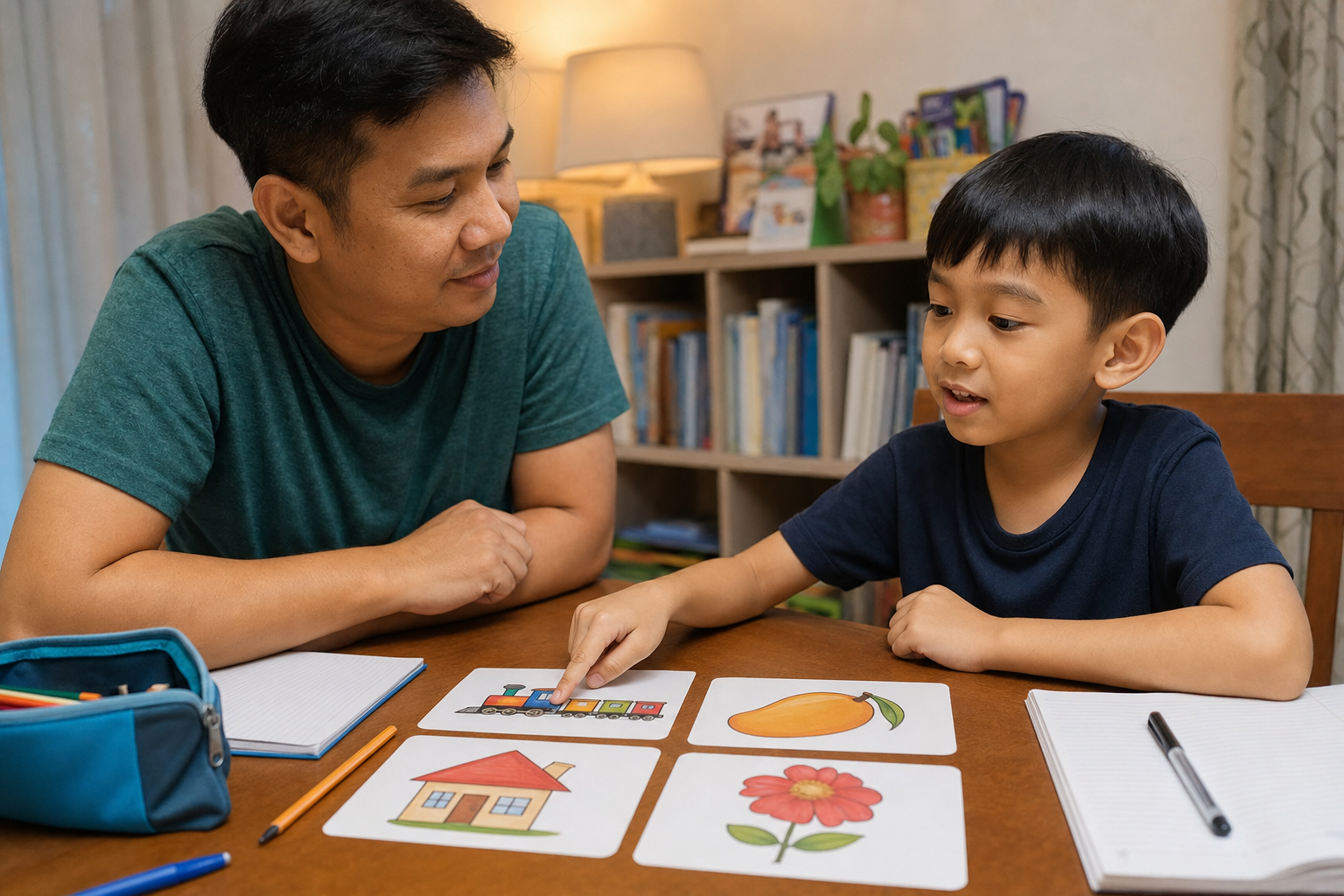
For exercises for brain and memory, I begin with four cards on the table: apple, bus, flower, and clock. Ryan looked, covered, named, checked, and tried again. Four cards are enough to reveal whether he lost the first item, mixed the middle order, or did not form a clear picture.
2. Ask what the child noticed first
Before I correct an answer, I ask, “What did you notice first?” The question tells me whether the child saw colour, shape, sound, story, or nothing at all. Parents often discover that the memory problem began as an attention problem.
3. Build one silly story link
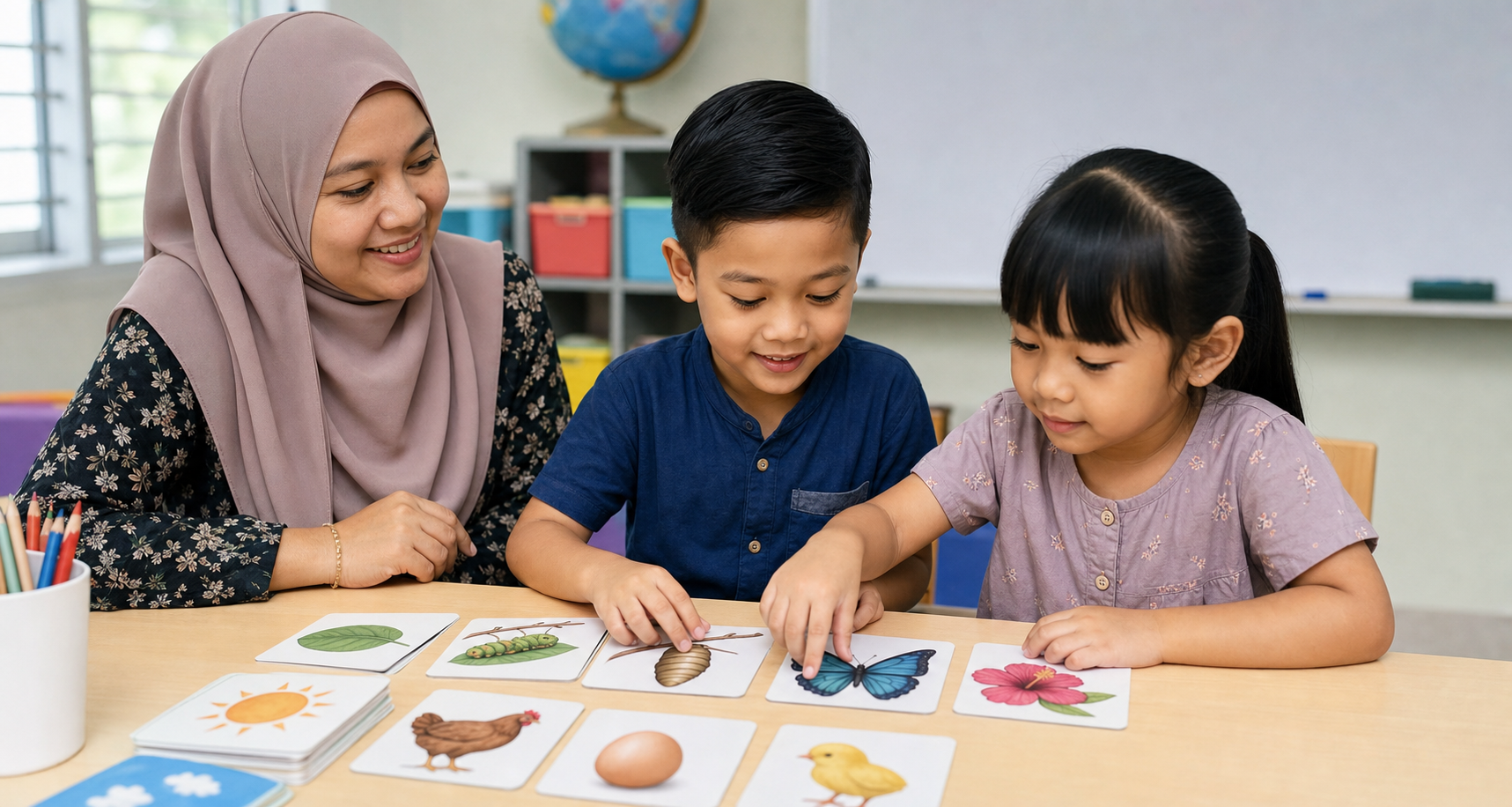
One of my favourite exercises for brain and memory is a small story link. Ryan imagined a bus carrying apples to a flower shop beside a giant clock. It sounded ridiculous, but it worked because the pictures stopped floating separately. A story gives memory something to hold.
4. Let bilingual thinking protect meaning
Many children in Malaysia think across English, Malay, Mandarin, Tamil, or a home dialect. I let Ryan explain the card story in Malay first, then we shaped one English sentence after the meaning was stable. Understanding first is not a shortcut; it is often the foundation.
5. Use explain-back before another worksheet
After a child recalls the cards, I ask him to teach the method to a parent. Explain-back reveals whether the child used a strategy or guessed. This is one reason exercises for brain and memory can feel gentler than extra worksheets: the parent hears the process, not just the score.
6. Add a short movement reset
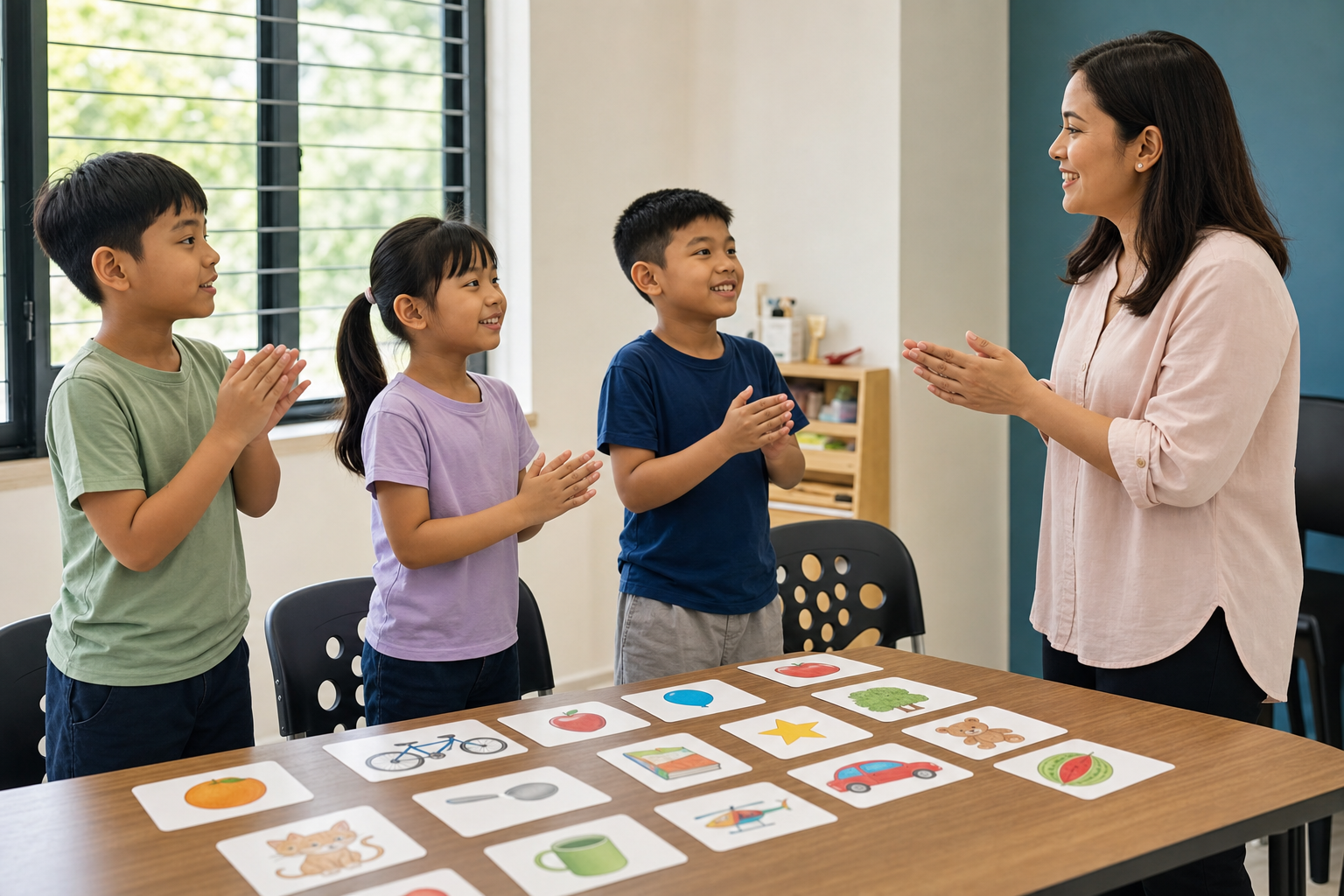
Some children need thirty seconds to stand, clap a rhythm, breathe, and sit before recalling again. I keep the reset short. Movement should guide the child back to attention, especially after a full Malaysian school and tuition day, not become an escape from learning.
7. Review once more after dinner
The most useful exercises for brain and memory are the ones families can repeat without turning home into a classroom. Try three minutes after dinner and one quick recall before packing the school bag. Families can explore the Brain Activation Class, memoHACK Trial Class page, memory exercises guide, memory and focus guide, and GMA parent testimonial page. For support with focus, comprehension, confidence, and learning habits, contact Genius Mind Academy through the GMA contact page and begin with four picture cards tonight.