something to help with memory was the phrase at the top of my GMA teaching note from Petaling Jaya on July 21, 2026. I will call the child Daniel, an anonymized Standard 2 learner who could remember football scores but forgot a four-word English spelling list after dinner. His mother looked tired, not angry. She wanted one calm starting point that would not turn the kitchen table into another tuition battle.
This article was written with the assistance of an AI writing program to help organize information clearly. I am writing from a first-person Genius Mind Academy education voice, using anonymized composite teaching details and parent feedback themes so no private child or family is exposed.
Something to Help With Memory: 7 Gentle Study Wins
At GMA, something to help with memory usually means a visible routine the child can repeat when recall feels messy. The GMA background explains our education focus on memory, concentration, creativity, speed reading, and personality. I am careful not to promise instant results. The useful goal is simpler: help a child notice, connect, recall, explain, check, and try again with less fear.
The outside guidance I trust is practical and modest. The EEF metacognition guidance discusses planning, monitoring, and evaluating learning. RetrievalPractice.org explains why pulling information from memory is different from rereading, and the Learning Scientists retrieval practice guide gives classroom-friendly retrieval practice examples. I also keep the CDC student sleep guidance and World Health Organization physical activity guidance in mind because tired or inactive children often struggle to focus before memory practice even begins.
Daniel’s parent feedback theme was familiar in Malaysian homes: “He knows it when I sit beside him, but he goes blank when I cover the page.” I used to correct too quickly. Years of teaching children around English, Malay, Mandarin, and Chinese homework taught me to ask what the child tried before I ask what the child missed.
1. Start with four picture cards
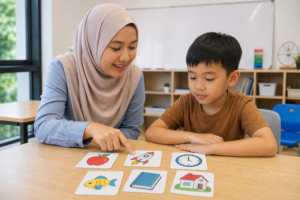
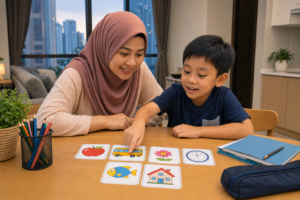
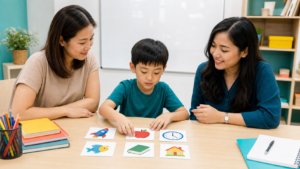
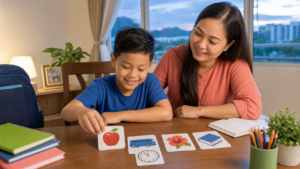
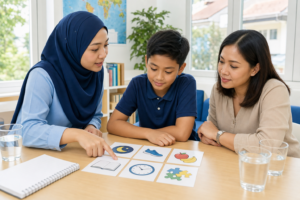
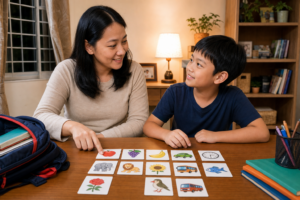
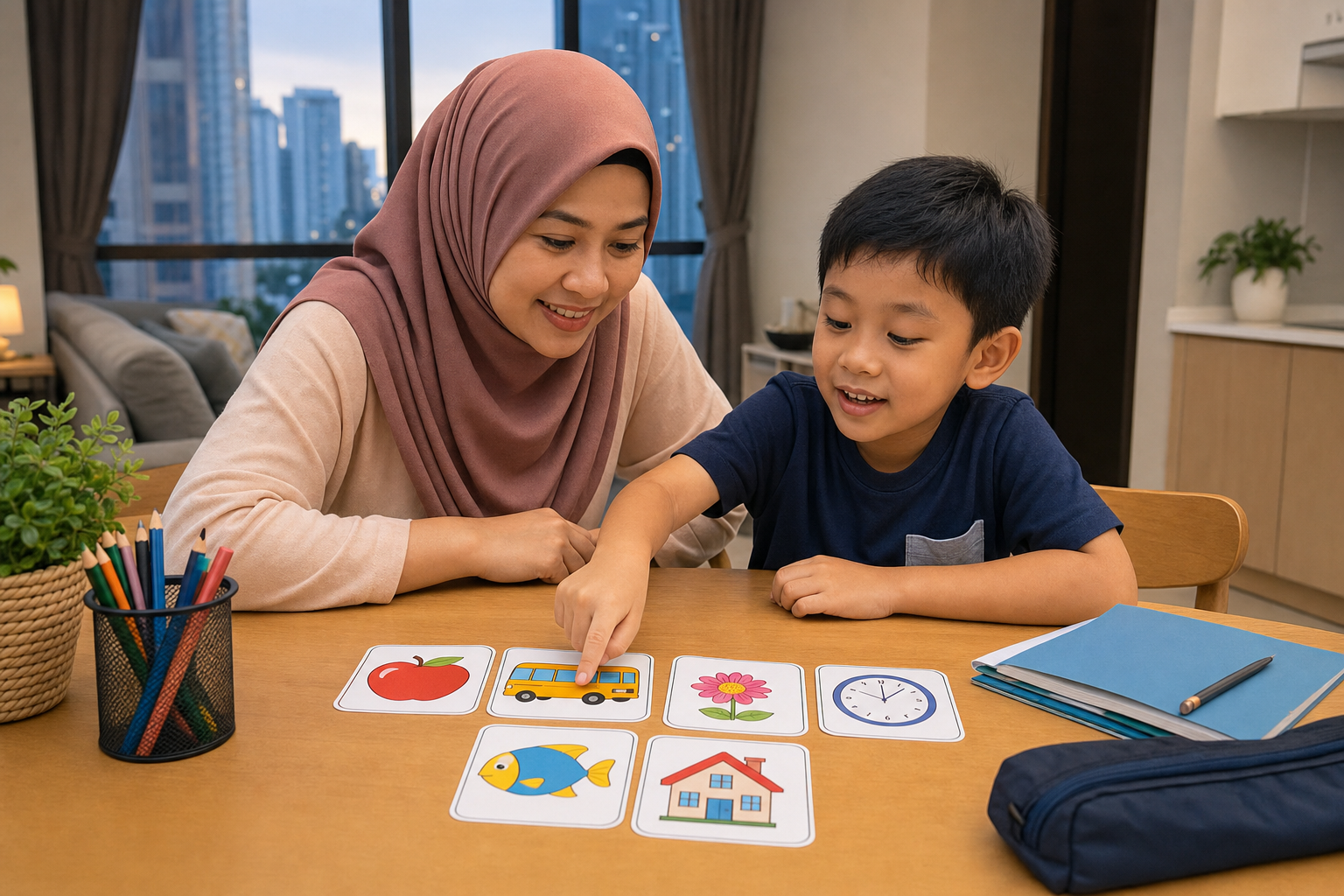
When a parent asks for something to help with memory, I begin with four cards on the table: apple, bus, flower, and clock. Daniel looked, covered, named, checked, and tried again. Four cards are enough to reveal whether he lost the first item, mixed the order, or did not form a clear picture.
2. Separate attention from memory
A missed answer is not always a memory problem. Sometimes the child is hungry, worried about scolding, distracted by a sibling, or exhausted after school and tuition. Before adding a new method, I check whether the child was looking, listening, and calm enough to begin.

3. Let the child explain in the strongest language
Many Malaysian children think across languages. Daniel described one picture story in Malay first, then shaped it into English. That was not a shortcut. It protected meaning before polish. Once the idea was secure, the school-language sentence became easier to practise.
4. Ask for explain-back before correction
I asked Daniel, “Show me how you tried.” He pointed to the bus card and said it came after apple because he imagined riding to school with an apple in his bag. That answer was not perfect, but it showed a strategy. Explain-back helps parents hear the child’s thinking instead of guessing from the score.

5. Fit reviews into real Malaysian evenings
If you need something to help with memory during homework, avoid making the first attempt too long. Try three minutes after dinner, two minutes before packing the school bag, and one recall before sleep. This respects families balancing tuition, bilingual reading, younger siblings, SPM pressure, and memories of UPSR or PT3-style revision stress.
6. Name one strategy, not ten mistakes
At the end of the activity, I ask the child to name one thing that helped: “I made a story,” “I saw the picture,” or “I remembered the first sound.” This small habit changes the mood. The child starts noticing tools instead of collecting failures.

7. Keep the next step small
For families searching for something to help with memory, the next step can be one repeatable card routine, not a pile of worksheets. Families can explore the Brain Activation Class, memoHACK Trial Class page, memory exercises guide, memory and focus guide, and GMA parent testimonial page. If your child needs support with focus, comprehension, confidence, and learning habits, contact Genius Mind Academy through the GMA contact page and start with four picture cards tonight.