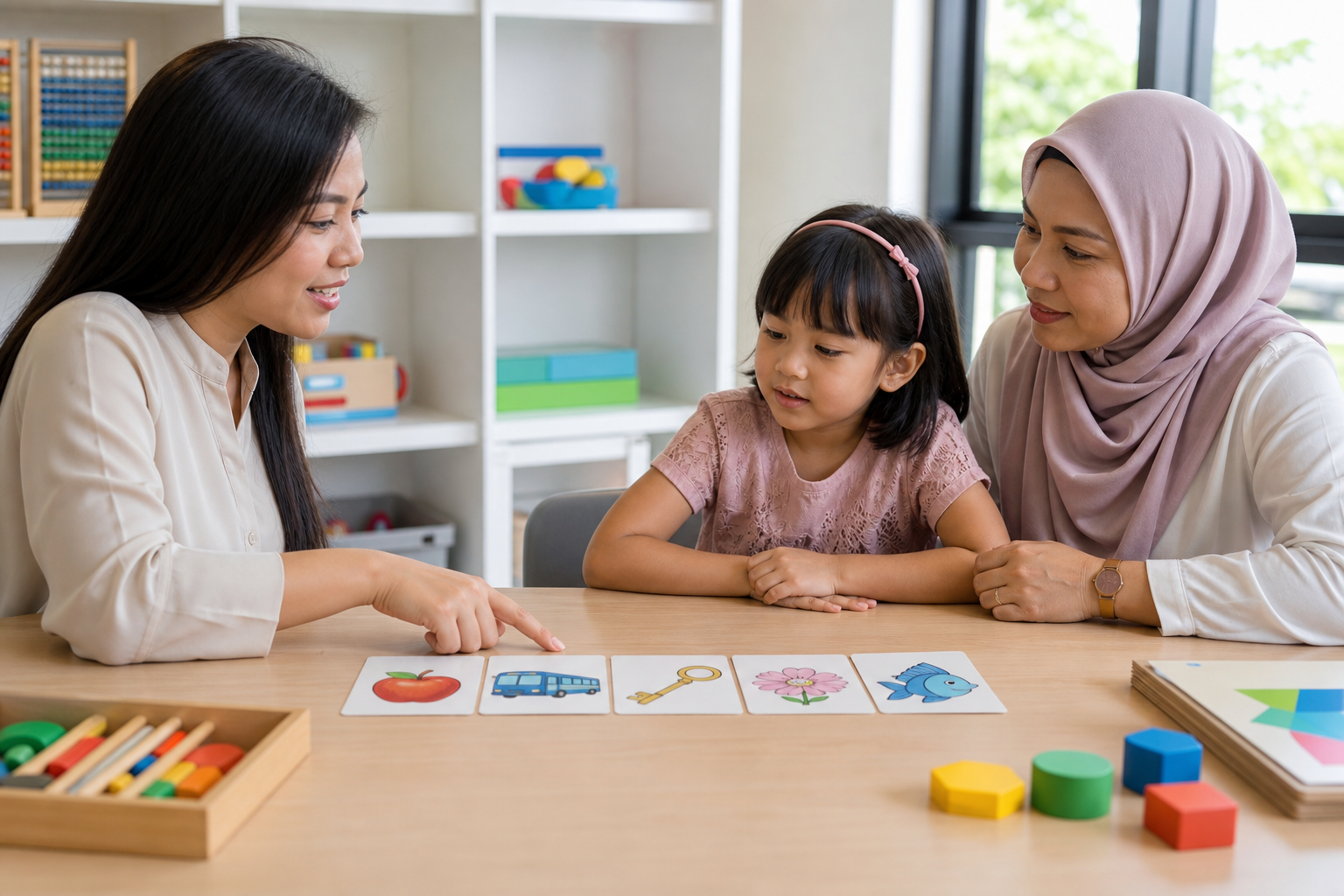
exercises to strengthen memory sound like something from a workbook title, but on 31 August 2026 the parent question in my notes was gentler: “How do I help him remember without ending the night in tears?” I am using a privacy-safe composite I call Danish, a Standard 4 child from Petaling Jaya who can recall football positions quickly but loses the order of BM comprehension points after tuition and dinner.
This article was written with the assistance of an AI writing program to help organize information clearly. This image was created using an AI image creation program. Danish is not a private student record; the public Genius Mind Academy feedback I can point parents to includes May Lee, Mr. Chow, and Christina on the public parent testimonial page, plus student sharing from Brunei and Keningau on the public student testimonial page. I am sharing learning habits, not medical advice, diagnosis, or promised marks.
Exercises to Strengthen Memory: 7 Positive Routines for Kids
When parents ask for exercises to strengthen memory, I first reduce the pressure. The goal is not to force a child to remember harder. The goal is to make attention, order, meaning, and recall visible enough that the parent can coach one step at a time. The Harvard Center guide to executive function describes executive function as skills for planning, focusing attention, switching gears, and managing information, which is a practical home-learning frame.
Malaysian families carry a crowded rhythm: school, transport, agama or Chinese tuition, dinner, then homework. Parents still mention UPSR and PT3 out of habit, while UASA, PBD, and SPM pressure shape many conversations now. The KPM academic calendar page is a useful reminder that children move through a real academic calendar, not an ideal timetable. Genius Mind Academy’s learning approach supports focus, memory, comprehension, confidence, and learning habits without turning every night into a test.
Families who want guided structure can explore Genius Mind Memory Games, the 90-minute Brain Activation Class, and the memoHACK Trial Class page. At home, I keep the first routine small enough to repeat on a tired school night.
1. Begin exercises to strengthen memory with five picture cards
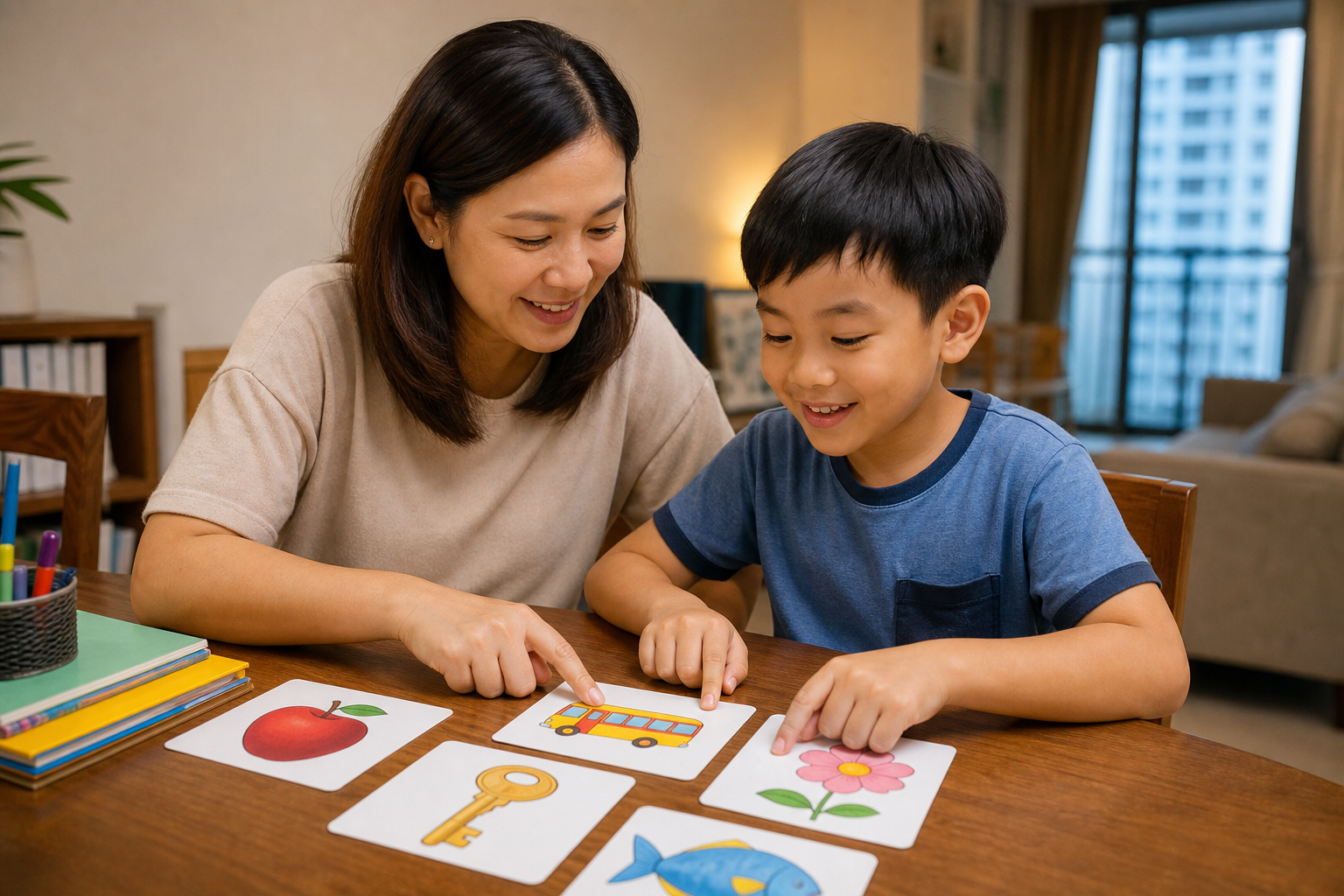
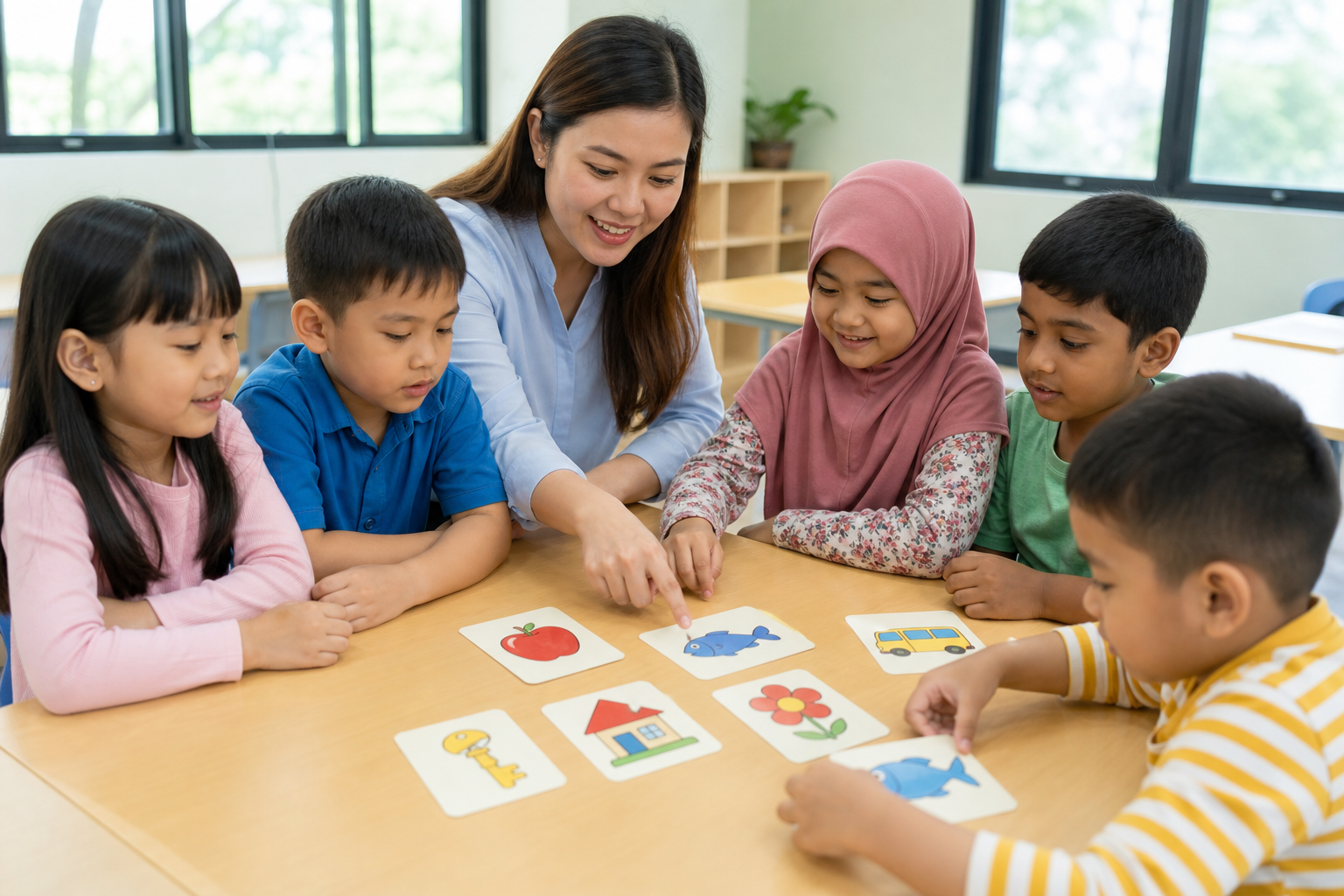
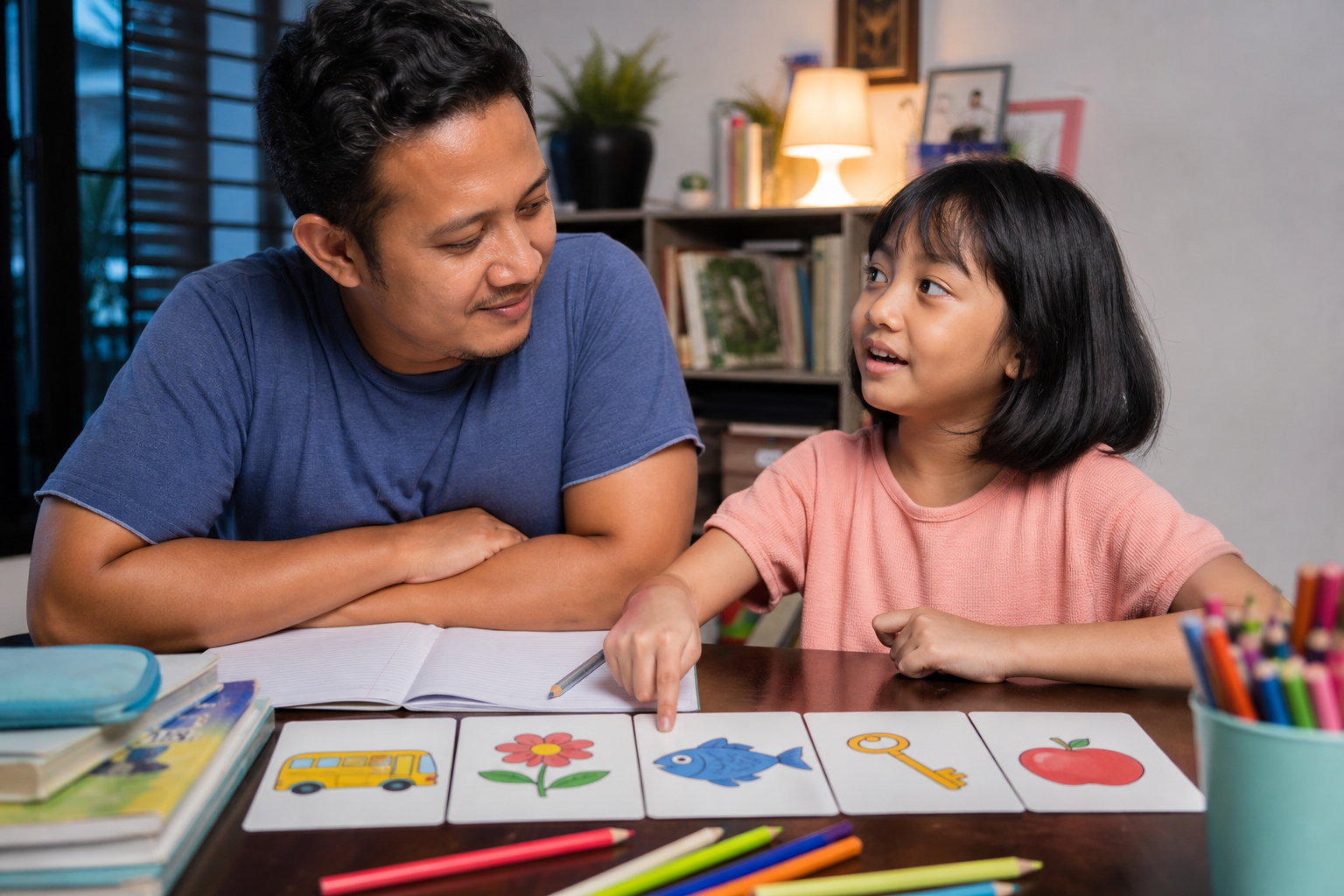
For exercises to strengthen memory at home, I start with five picture cards: apple, bus, key, flower, and fish. Danish looked for twenty seconds, covered the cards, and rebuilt the row. He remembered three at first. His mother wanted to correct the missing two immediately, but we paused to name the three he held. That small pause changed his face.
2. Build a tiny story before asking for recall
A story gives memory a path. The apple went on a bus, found a key, opened a gate, and saw a fish near flowers. It sounds silly, but it lets a child attach order to meaning. I learned this the hard way after years of asking children to repeat lists that had no handle for them.
3. Close the book sooner and practise retrieval
The Retrieval Practice guide explains why pulling information back from memory matters. After a short Science or BM paragraph, close the book and ask for two remembered ideas. If only one appears, give a clue. More rereading can look hardworking, but retrieval shows whether the idea can return when the page is gone.
4. Let the strongest home language carry meaning
The UNESCO multilingual education guidance is relevant in Malaysian homes because children often move between English, Malay, Mandarin, Tamil, Cantonese, or another family language. Danish sometimes explained a Malay passage in English first, then shaped the BM answer. Meaning first is not laziness; it is often the bridge into clearer school language.
5. Use movement as a calm attention reset
The WHO physical activity fact sheet notes that physical activity supports health and well-being, including cognitive benefits for children and adolescents. During revision, movement can stay tiny: stand, touch card one, say the cue, sit, and recall. I use movement as an attention reset, not as a promise that one activity changes everything.
6. Ask the child to name the method
The Education Endowment Foundation metacognition summary describes pupils learning to plan, monitor, and evaluate their learning. At home, the question is simpler: “What helped you remember this time?” Danish said, “The bus story.” That one answer gave his mother a repeatable method instead of another reminder to concentrate.
7. Stop with one clean win before tiredness wins
The CDC sleep guidance connects sleep with attention and memory in daily life. I have learned not to chase one more perfect round when the child is already fading. A ten-minute routine that ends with one accurate recall usually protects tomorrow’s willingness better than a forty-minute argument.
If exercises to strengthen memory brought you here, start tonight with five picture cards, one short story, and one kind observation. Write “remembered three cards,” “used Malay first,” or “needed one clue.” Parents who want guided support can contact Genius Mind Academy through the contact page. Keep the routine small, visible, and calm enough to survive a real Malaysian school night.