brain improving exercises is a phrase many parents search when a child forgets instructions quickly. On 15 October 2026, I am writing in the education voice of Genius Mind Academy, thinking of an anonymized Malaysian learner I will call Mei Lin, whose father said, “She knows the answer, but the steps disappear.”
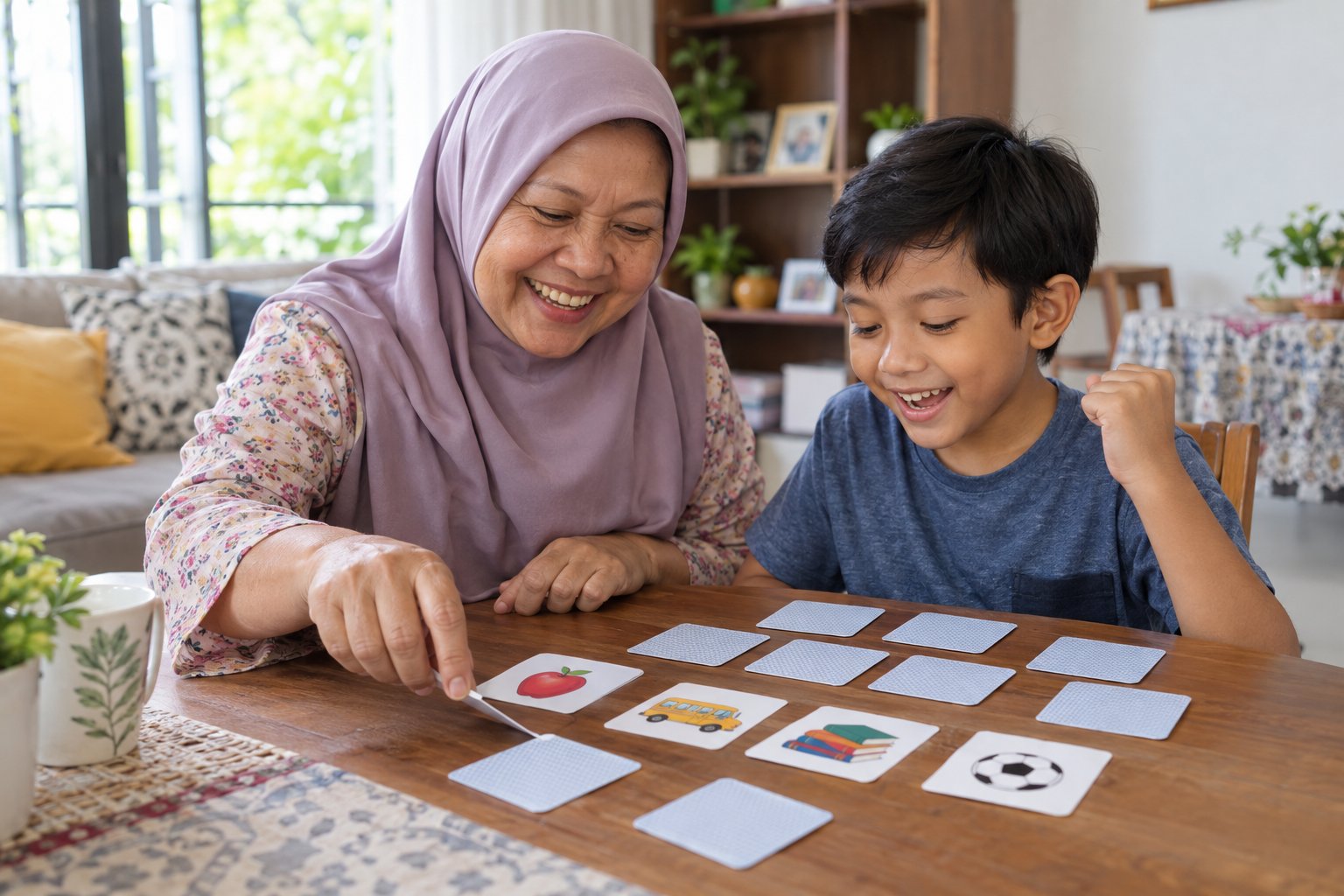
This article was written with the assistance of an AI writing program to help organize information clearly. This image was created using an AI image creation program. I reviewed public Genius Mind Academy parent feedback and Genius Mind Academy student testimonial pages before writing, and I am using privacy-safe teaching patterns, not private student files.
Important note for parents: this is educational guidance, not medical advice. If a child’s memory changes suddenly, affects safety, or worries you deeply, speak with a qualified professional. Here, I use brain improving exercises as a parent search phrase and adapt it toward safe learning habits, confidence, and classroom readiness.
Mei Lin’s father first thought the answer was more reminders. I understood why. Malaysian homes are busy: school homework, tuition, spelling, ejaan, Chinese vocabulary, dinner, and bedtime all squeeze into a few hours. But repeating the instruction louder only made Mei Lin smaller. We needed a routine that let her succeed before the schoolwork became emotional.
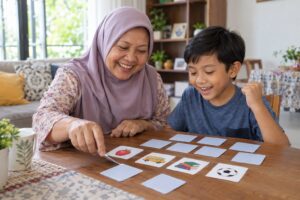
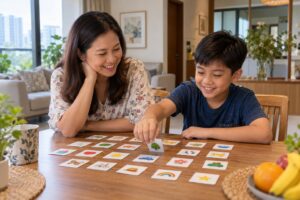
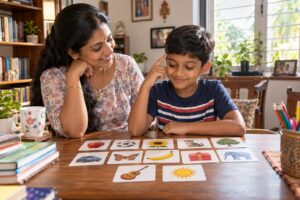
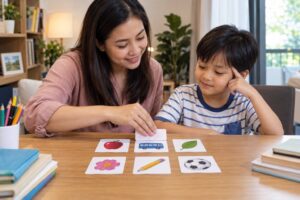
The first useful change was a cover-and-recall game with picture cards. She looked at four cards, covered one, and named what was missing. The task was tiny, but the emotional shift was not. Her father could finally say, “You found it,” instead of “Why did you forget again?”
We also changed the timing. Instead of starting after everyone was already tired, her father tried one short round before the heavier homework. That small decision mattered. Mei Lin entered the worksheet with one win already in her body. For many children, confidence is not a speech from an adult; it is proof from the last two minutes.
Brain Improving Exercises: 7 Gentle Wins
When parents ask for brain improving exercises, I hear a deeper question: how can my child hold one more step without feeling ashamed?
1. Start With Two-Step Instructions
Begin with “Take the book, then sit here.” Do not begin with five chores shouted from another room. The What Works Clearinghouse study guide supports retrieval practice and spaced review, but children need the load small enough to retrieve successfully.
2. Use Picture Cards With Real Images
Place four picture cards in a row, cover them, and ask the child to rebuild the order. Brain exercises to improve short term memory should be concrete enough for a tired child to see, touch, and explain. Blank cards create confusion; pictures create hooks.

3. Play Missing Card, Then Repair
Cover one card and ask, “What is missing?” If the answer is wrong, uncover it kindly and try again. Forgetting should become information, not shame. That one belief can change the whole mood of a school-night study table.
4. Let Home Language Help First
If your child explains better in Malay, Mandarin, Tamil, English, or a home dialect, allow it. UNESCO multilingual education guidance supports learning through languages children understand. Understanding first, exam sentence second.

5. Practise A Three-Step Teach-Back
Ask your child to teach the routine: “Look, cover, say.” Mei Lin enjoyed becoming the teacher for one minute. This is one of the brain improving exercises that parents can use before spelling, science facts, or BM comprehension. Her father wrote down one phrase she used well, then mentioned it at dinner. That small, specific recognition helped her return to the routine the following evening without a reminder.
6. Add A Memory Walk
Put three plain colored circles on the floor: first, next, last. The child steps and says the sequence. The CDC physical activity page notes immediate brain-health benefits of activity for children, and movement can help restless learners stay with the task.
7. Close With Rest And One Success
Mei Lin looked most forgetful after late nights. The CDC Healthy Schools sleep page links sleep with focus, concentration, and academic performance. End the practice with one named success so the child can return tomorrow with dignity.

If brain improving exercises brought you here, begin gently: two steps, four picture cards, one teach-back, and enough rest. Parents can explore Genius Mind Academy memory games, the Genius Mind Academy Brain Activation Class, the Genius Mind Academy Brain Test Report, or contact Genius Mind Academy for support with focus, comprehension, confidence, and learning habits.