brain exercises to increase memory power is the phrase I wrote beside a parent note on 15 October 2026. I am writing in the education voice of Genius Mind Academy, thinking of a Petaling Jaya learner I will call Aiman, whose mother said, “He understands when I sit beside him, then he loses the steps once the homework starts.”
This article was written with the assistance of an AI writing program to help organize information clearly. This image was created using an AI image creation program. Before writing, I reviewed public Genius Mind Academy parent testimonial videos and Genius Mind Academy student testimonial videos, then shaped this as an anonymized, privacy-safe teaching-pattern story rather than a private student record.
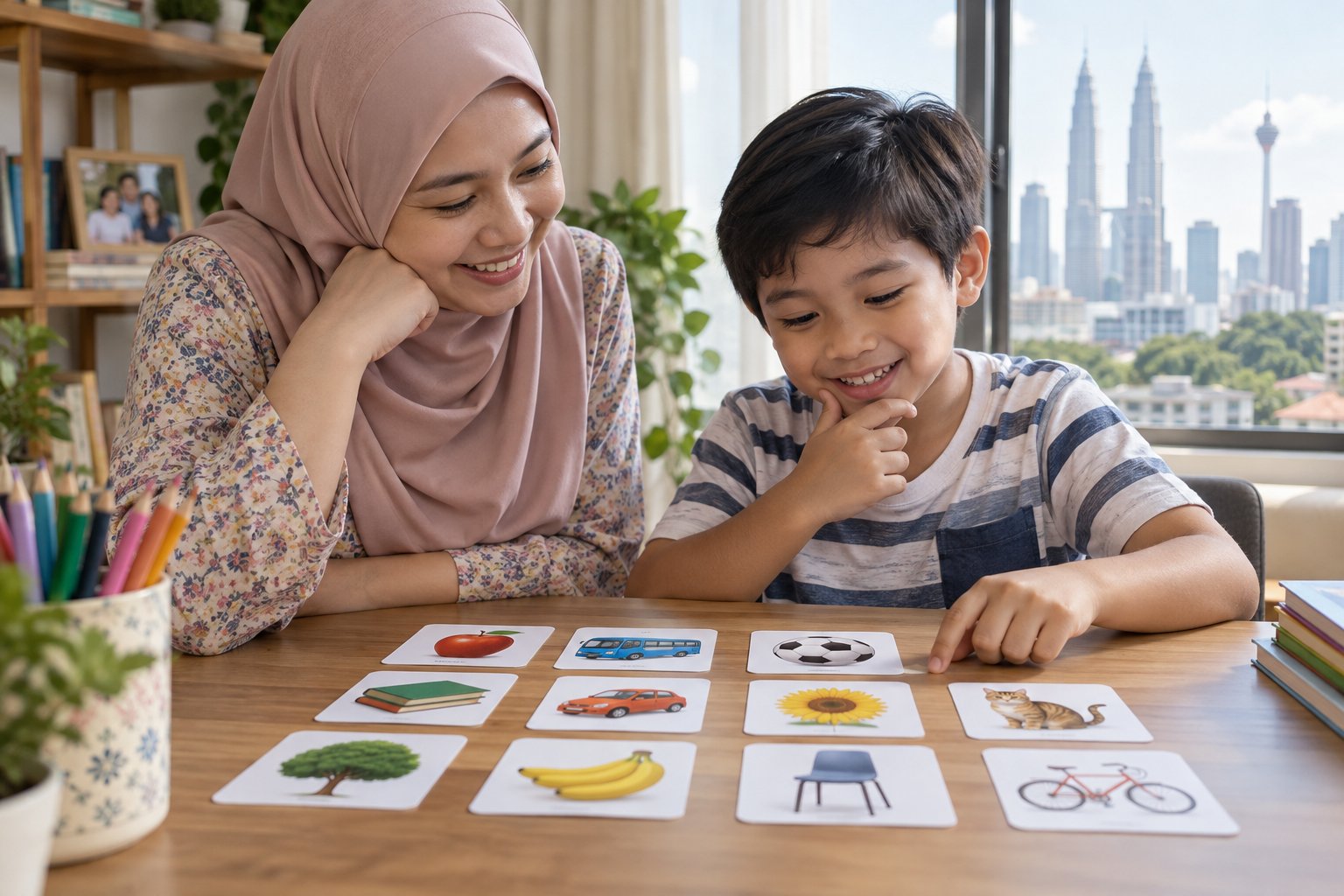
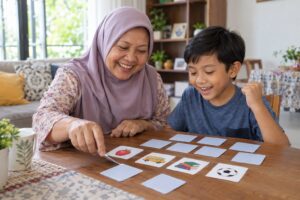
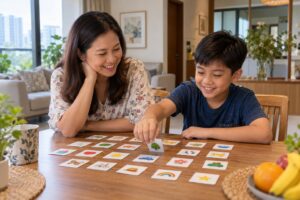
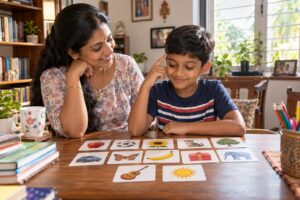
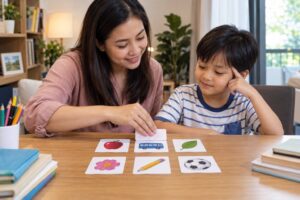
My early mistake with children like Aiman was asking for more effort before giving them a clearer route. “Focus properly” sounded sensible, but it did not tell him what to look at, what to hold, or how to check himself. When we changed the task into six picture cards, a ten-second look, and one gentle recall round, his face softened.
That is why I prefer brain exercises to increase memory power that are short, visible, and repeatable. They do not promise instant brilliance. They help a child notice, hold, retrieve, explain, and try again. For Malaysian families moving between Bahasa Melayu, English, Mandarin, Tamil, agama class, tuition, and SPM pressure, the routine has to fit a normal school night.
I also watch the parent’s tone. A worried adult can accidentally turn a memory practice into a test of character. A calm adult turns it into a game with a clear ending. Aiman’s mother told me the biggest change was not only that he remembered more cards. It was that he stopped saying, “I cannot.”
Brain Exercises To Increase Memory Power: 7 Calm Wins
The most useful brain exercises to increase memory power begin with retrieval, not a longer lecture. A child needs safe chances to bring an idea back before the idea becomes steady in schoolwork.
1. Begin With Six Picture Cards
Choose cards with simple pictures: apple, bus, leaf, pencil, ball, flower. Let your child study them for ten seconds, cover them, then ask what is remembered. The What Works Clearinghouse study guide supports spaced practice and retrieval practice as learning strategies, and picture-card recall is the parent-friendly version I reach for first.

2. Ask For One Reason, Not Ten
After recall, ask, “Which card helped you remember the next one?” Aiman linked bus to school and pencil to homework. Brain exercises to increase memory power work better when the child can explain one link instead of guessing through the whole row.
3. Add A Tiny Movement Path
Place three plain colored markers on the floor: first, next, last. The child steps and says each idea. The CDC physical activity page describes immediate brain-health benefits of activity for children, and in class I often see movement reduce restless guessing.

4. Let The Strongest Language Carry Meaning
Some children remember better after explaining the story in Malay, Mandarin, Tamil, English, or a home dialect first. UNESCO multilingual education guidance supports learning through languages children understand. Meaning first, polished school answer second.
5. Use Teach-Back Before Homework
Ask, “Can you teach me the steps?” Aiman learned to say, “Look, cover, say, check.” That four-word script became his bridge from play to homework. It is one of the brain exercises to increase memory power that parents can repeat in five minutes.
6. Protect Sleep And Snack Timing
I avoid judging focus without asking about the evening routine. Late nights and rushed meals can make a child look careless when the body is simply tired. The CDC Healthy Schools sleep page connects sleep with focus, concentration, and academic performance, which many Malaysian parents notice the next morning.
7. End With One Named Win
Instead of “Good job,” say, “You remembered the middle card,” or “You checked without being reminded.” Harvard’s Center on the Developing Child describes play as a way to practise focus, working memory, and self-control in everyday life: brain-building through play. Name the win so the child can carry it into tomorrow.

If brain exercises to increase memory power brought you here, start with six picture cards tonight and stop while your child still feels successful. Families who want guided learning support can explore Genius Mind Academy memory games, the Genius Mind Academy Brain Activation Class, the Genius Mind Academy memoHACK trial class, or contact Genius Mind Academy for a calm next step.