Memory help can be gentle, practical, and encouraging when parents know how to support a child at home. Many Malaysian parents notice that their child understands a lesson during tuition, then forgets the steps during homework or an exam. That does not mean the child is lazy. Often, the child needs clearer attention, better recall habits, and more confidence.
Memohack is an unconventional brain training program using the 565 formula: five sensory activations—(1) Visual, (2) Auditory, (3) Touch, (4) Smell, and (5) Taste; six balancing areas—[1] Focus, [2] Concentration, [3] Attention, [4] Relaxation, [5] Comprehension, and [6] Self-regulation; and five enhancements—[1] Brain Speed, [2] Brain Energy, [3] Brain Connectivity, [4] Brain Stamina, and [5] Neurogenesis. We avoid medical promises and quick-fix claims. The aim is to help children build stronger learning habits that they can use in school and daily life.
Memory Help: 7 Positive Ways to Support Your Child
1. Start With One Clear Instruction
Children remember better when they know exactly what to notice first. Before homework, clear the table, keep only the needed materials nearby, and give one short instruction. Ask your child to repeat the first step in their own words before beginning.
This kind of memory help connects attention with action. GMA’s Brain Activation Class uses structured readiness activities so children can settle into learning with more focus.
2. Use Pictures Before Long Sentences
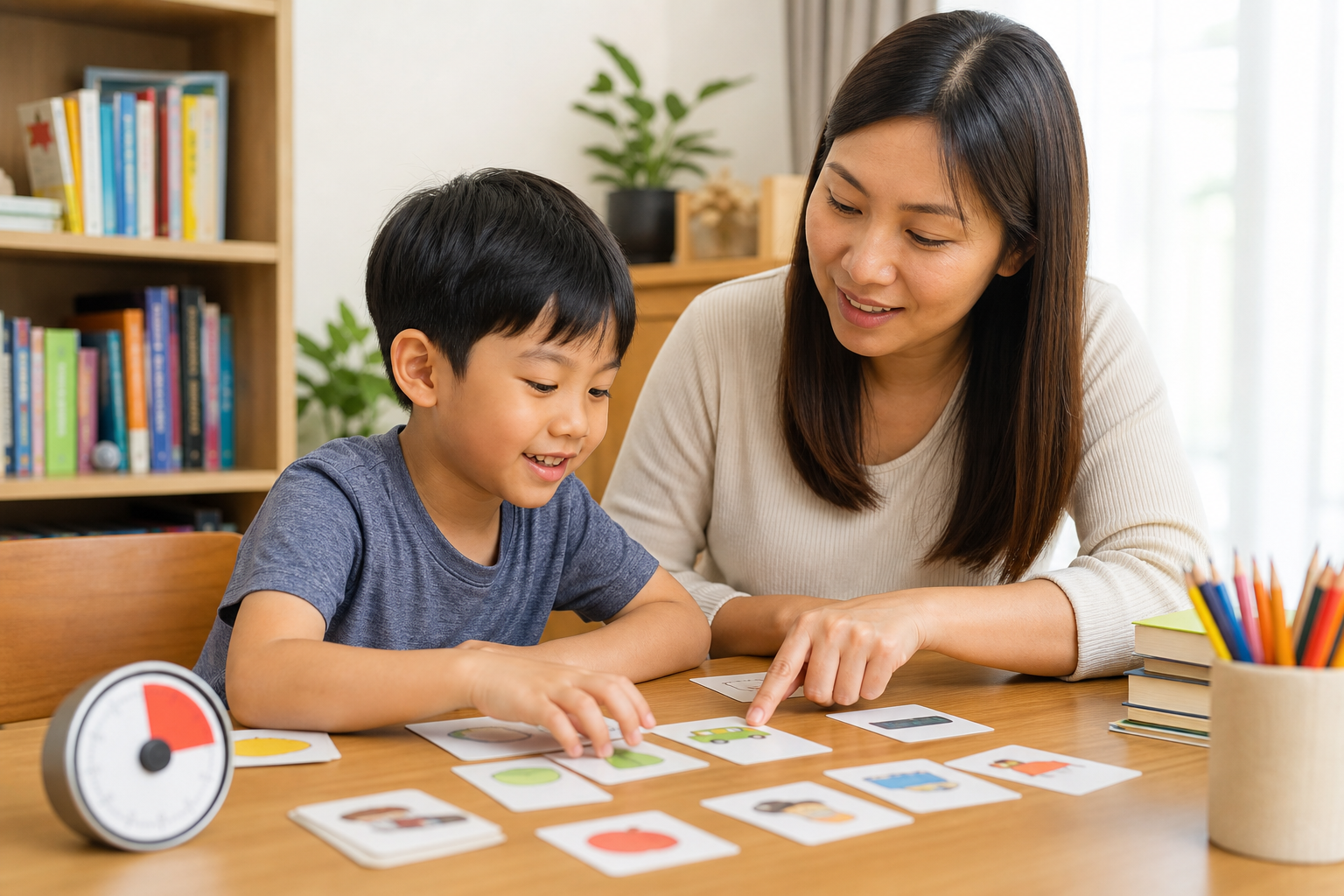
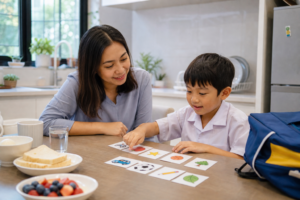
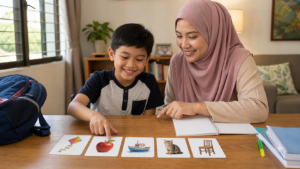
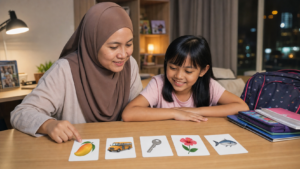
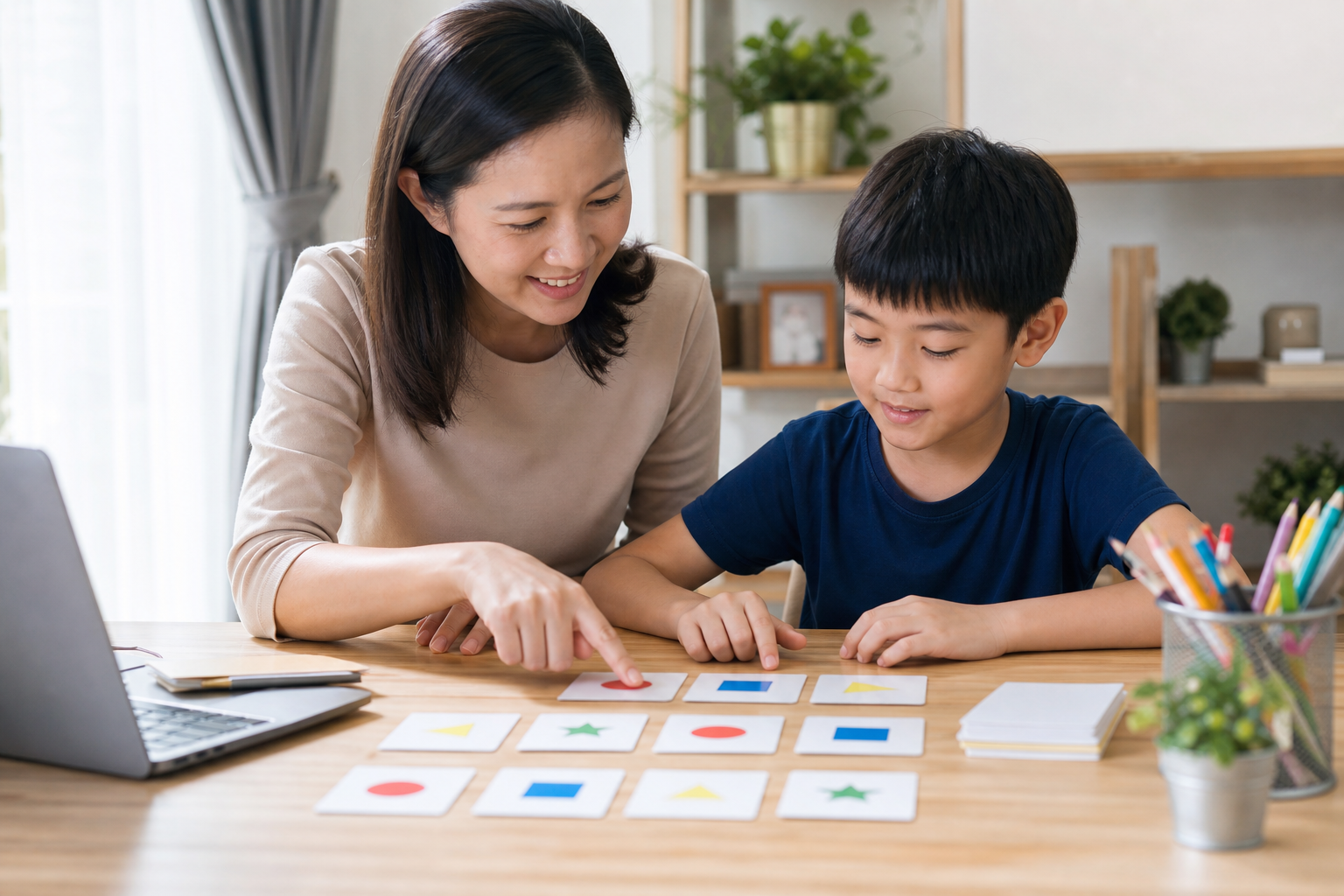
A child may forget a long explanation but remember a simple picture, shape, or arrangement. When learning a story, science idea, or spelling pattern, invite your child to draw a quick symbol or arrange cards in order. The picture does not need to be artistic. It only needs to make the idea easier to retrieve.
3. Practise Active Recall
After a short lesson, close the book and ask, “What can you remember?” Your child can say it aloud, draw a map, move cards, or teach the idea back to you. This gives useful memory help because the brain practises bringing information back, not just looking at it again.
GMA’s Memohack Online Class supports strategies such as visualization, association, and recall practice, which can make revision more active and less stressful.
4. Break Big Tasks Into Smaller Parts
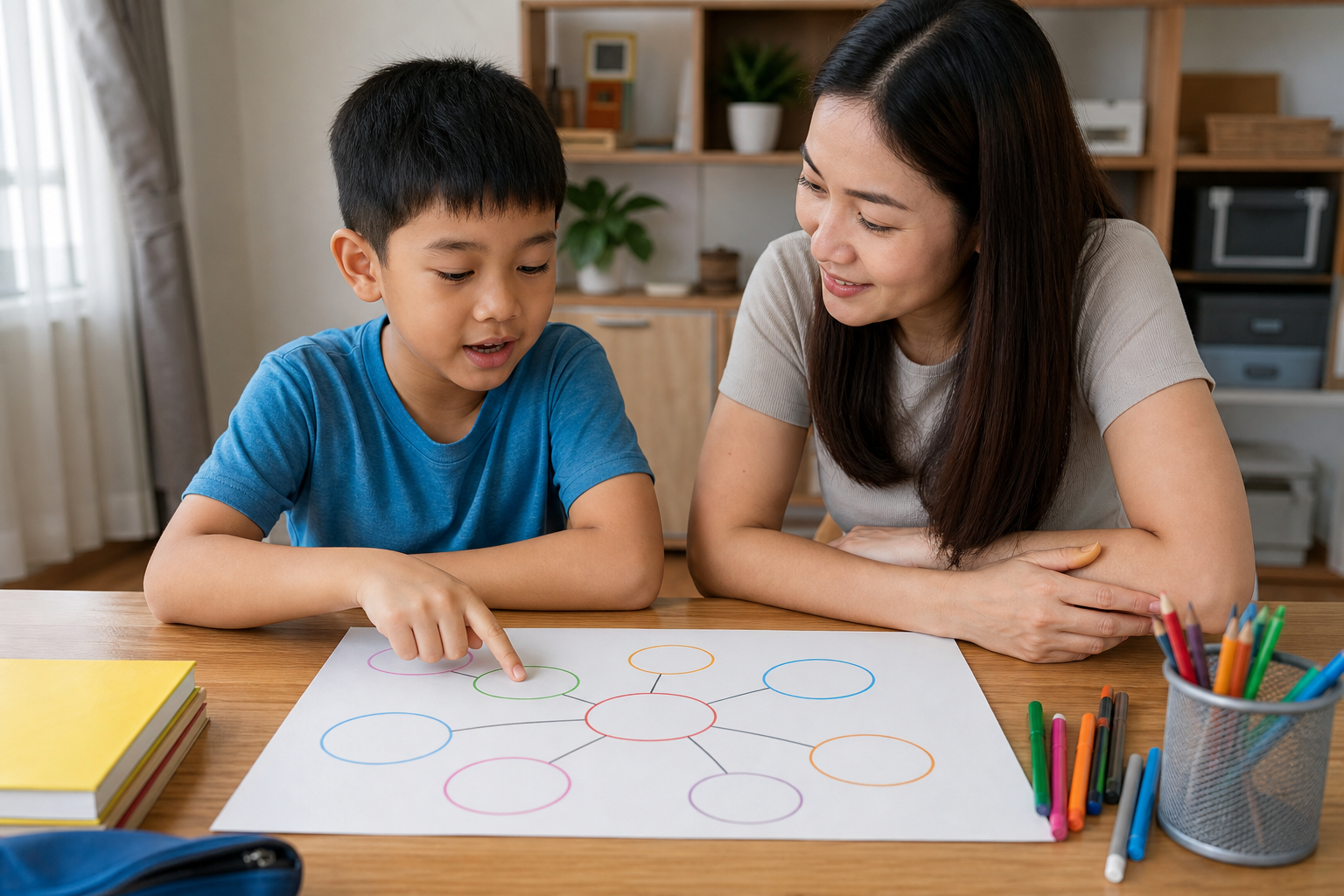
Long tasks can overload a child. For spelling, practise five words before adding more. For maths, read the question, circle the important information, solve one step, then check. Smaller parts reduce pressure and make success easier to notice.
5. Review With Spacing
Short review across several days is usually better than one tiring session. Review today, tomorrow, and again later in the week. Use a small card box or notebook so your child can see which items are easy and which need another calm practice.
Harvard’s Center on the Developing Child explains that executive function skills help children manage attention, information, and goals. Parent-friendly routines can support these skills through steady practice.
6. Add Movement When Attention Drops
Some children need movement before they can return to the table. Try a short stretch, a floor pattern, or a quick walk to get water. Then come back with one clear next task. Movement is not a shortcut, but it can refresh readiness.
The CDC child activity guidance notes that regular physical activity supports healthy development. For learning, short movement can be part of a balanced routine.
7. Protect Confidence
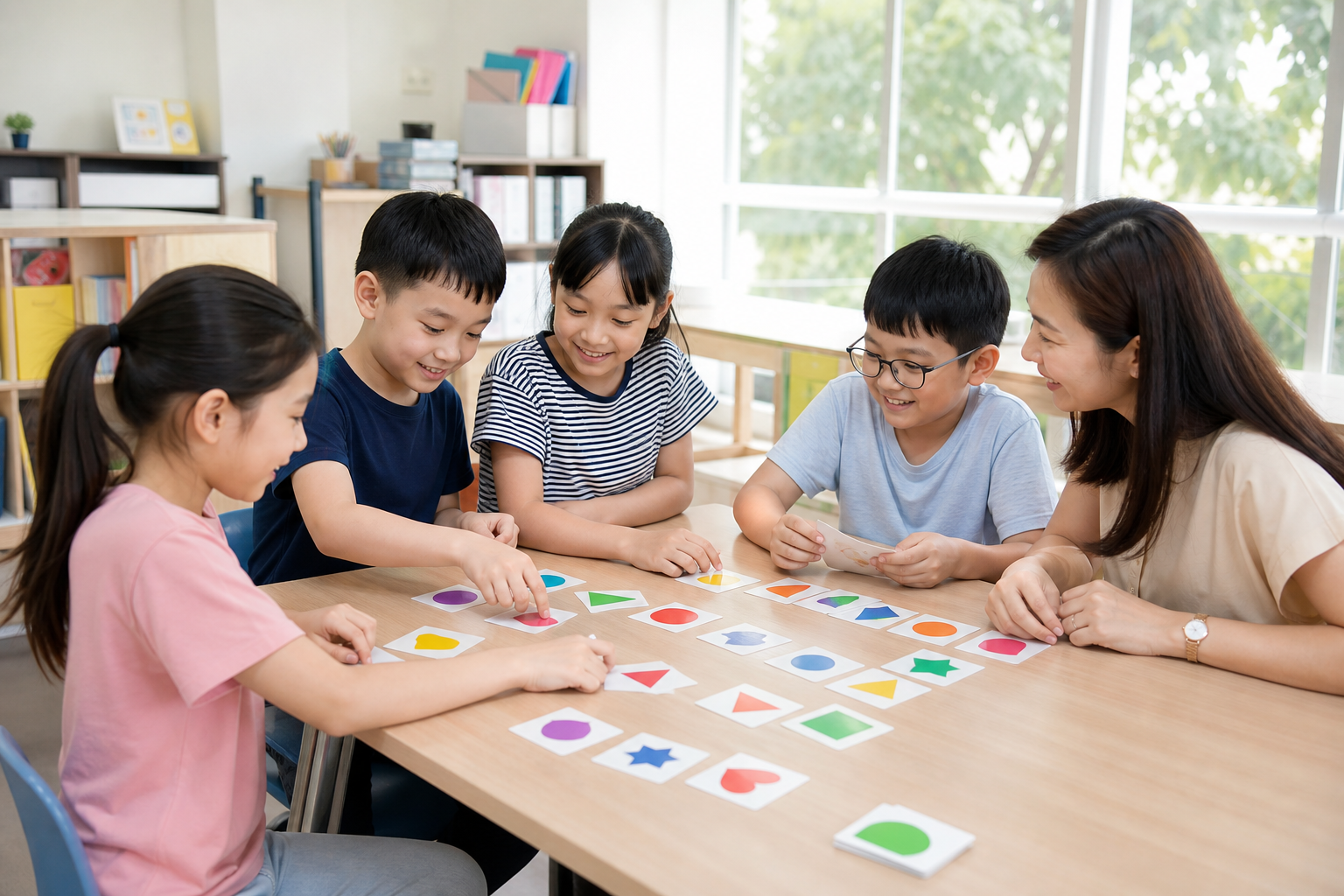
Children accept memory help more easily when they feel safe. Praise the strategy, not only the result. Say what worked: you looked carefully, you checked the order, or you tried again calmly. If your child forgets, lower the challenge and rebuild from one small success.
If your child forgets instructions often or feels discouraged by revision, the Memohack trial class can help parents explore a structured learning path. With patient routines, memory help can become part of a calmer home study rhythm.