ways to help your memory was the phrase I wrote at the top of my August 16, 2026 planning note after reviewing a common Malaysian school-night pattern. An anonymized composite I call Danish, from a Petaling Jaya family, could explain a Science chapter in the car but lost the same facts after dinner when English spelling, BM homework, and Mandarin reading all arrived together. The public feedback I can verify comes from Genius Mind Academy pages.
This article was written with the assistance of an AI writing program to help organize information clearly. This image was created using an AI image creation program. I am grounding this story in public references such as May Lee, Mr. Chow, and Christina on the public parent testimonial page, plus Brunei and Keningau students on the public student testimonial page, not private stories I cannot show.

Ways to Help Your Memory: 7 Calm Habits for Malaysian Kids
When parents search for ways to help your memory, they are usually not looking for a complicated theory. They want their child to remember the spelling list, the karangan points, the Science terms, or the steps in a maths method without tears. The Harvard Center guide to executive function describes executive function as skills that support holding information and managing tasks, while the Retrieval Practice guide explains the value of bringing information back to mind.
Danish’s composite mother first tried longer revision. I have learned that longer is not always kinder. In a Malaysian home with tuition traffic, younger siblings, and SPM talk in the background, ways to help your memory should feel small enough to repeat, even on a tired Tuesday night.
At Genius Mind Academy, the support stays practical: focus, memory, comprehension, confidence, and learning habits. The aim is not to label a child as careless. The aim is to help the child see a route back to what was learned, then practise that route with a parent or coach nearby.
1. Use ways to help your memory as a small card routine
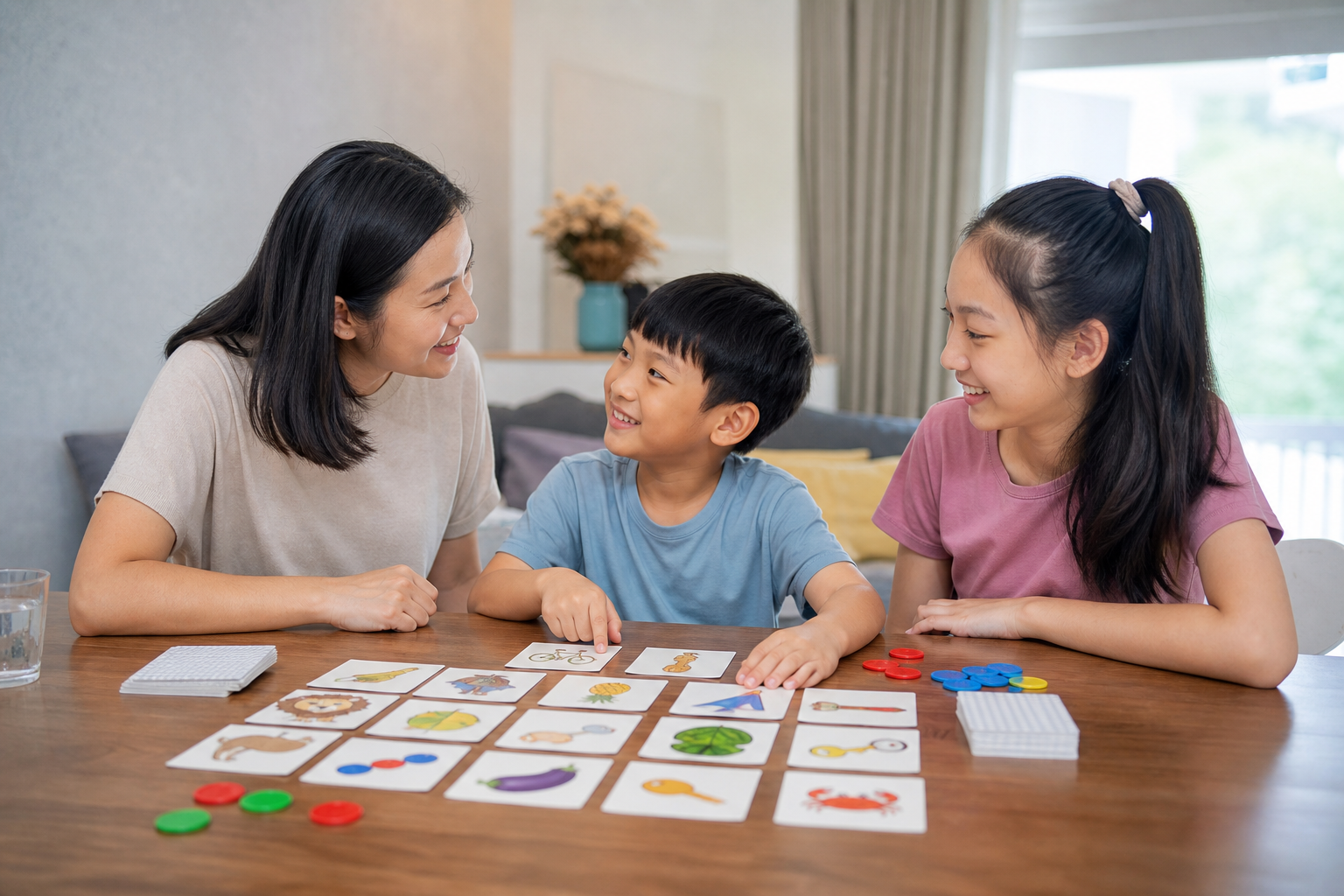
For ways to help your memory, start with five picture cards: cup, bus, apple, key, and shoe. Let the child look, cover the cards, and rebuild the order. If the child remembers three, celebrate the three before adding another card. The pictures matter because memory becomes something the child can touch and rearrange.
2. Ask one explain-back question
After reading a short paragraph, ask, “What did you understand first?” This one question shows whether the child has meaning, not only copied words. I like it because a parent becomes a listener before becoming a corrector, and many children relax when the first response is not a red mark.

3. Let home language support school language
Many Malaysian children think across Malay, English, Mandarin, Tamil, Cantonese, Hokkien, or another home language. The UNESCO multilingual education guidance notes the importance of learning in a language children understand. If a child can explain a concept in Malay or Mandarin first, use that as a bridge toward the school-language answer.
4. Keep the recall window short
Set a two-minute timer. Close the book, ask for two points, check the page, and stop. Short recall protects energy. It also gives parents a fairer picture than a late-night argument after the child is already exhausted from school, transport, and tuition.

5. Add movement before repeating
The WHO physical activity fact sheet describes physical activity as important for health and well-being. At home, movement can be gentle: stand, point to a card, say one fact, and sit again. I do not present this as a medical answer. I use it as a practical attention reset before the next recall attempt.
6. Protect sleep as part of learning
The CDC sleep guidance connects sleep with attention and memory in daily life. Malaysian families often push revision late because exams feel close even when UPSR and PT3 have changed over the years and SPM pressure remains familiar. A calm review before exhaustion usually works better than one more tense page.
7. Track confidence, not only marks
Write one weekly note: “started faster”, “recalled four cards”, or “explained in Mandarin then English.” The Genius Mind Memory Games, Brain Test Report, 90-minute Brain Activation Class, memoHACK Trial Class page, and Genius Mind Academy’s learning approach show how Genius Mind Academy supports learning habits without medical or treatment-style promises.
If ways to help your memory brought you here, try one five-card recall routine tonight. Keep it warm, short, and repeatable. Families who want guided support can contact Genius Mind Academy through the contact page.