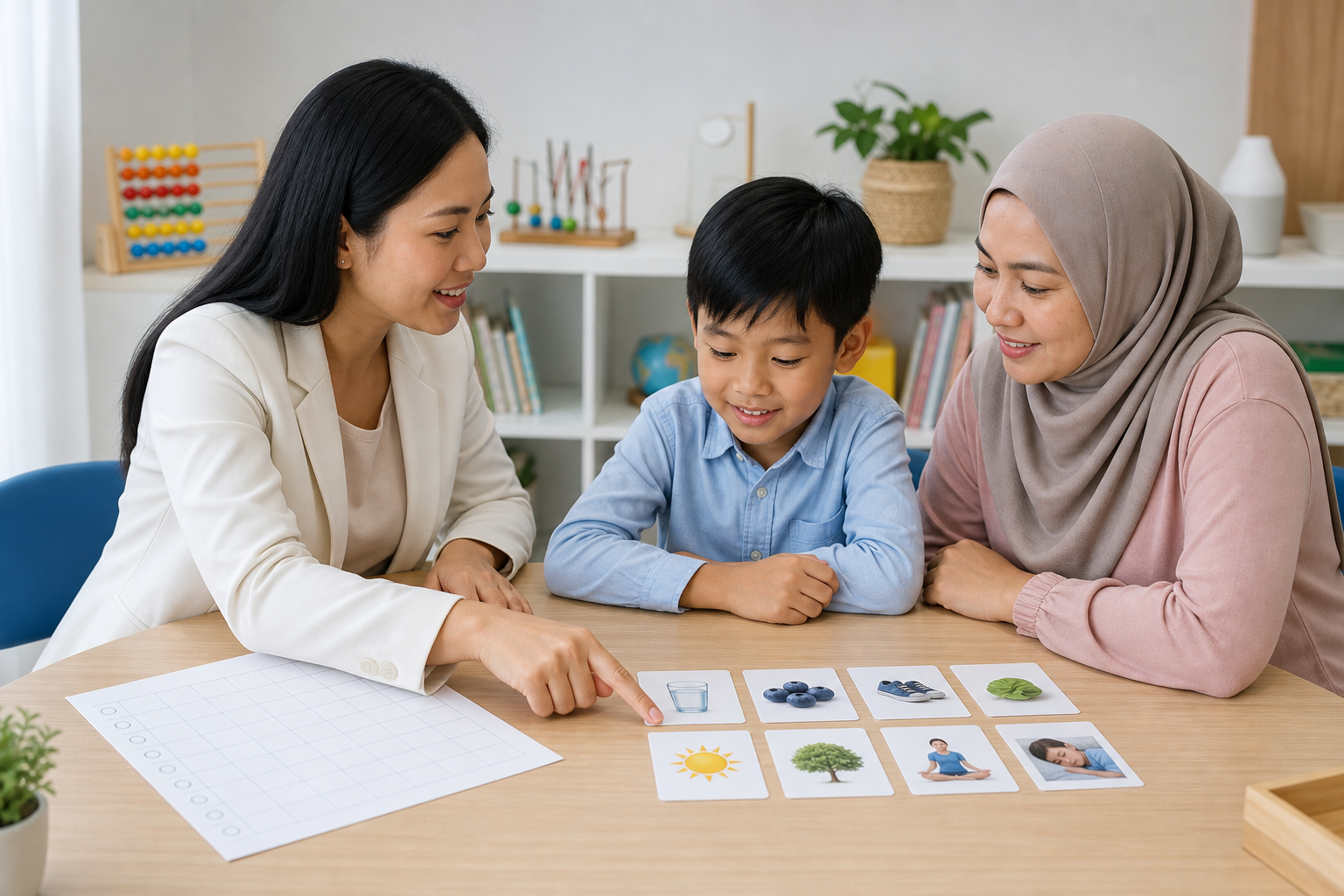
natural ways to improve focus and memory became the line in my 27 August 2026 notes after a Klang Valley mother told me, “He knows the answer in the car, then loses it at the table.” I am using a privacy-safe composite I call Danish, a Standard 5 child who can remember football positions clearly but forgets the second instruction once BM comprehension and English spelling sit on the same evening.
This article was written with the assistance of an AI writing program to help organize information clearly. This image was created using an AI image creation program. Danish is not a private student record; the real public Genius Mind Academy feedback I can point to includes May Lee, Mr. Chow, and Christina on the public parent testimonial page, plus Brunei and Keningau student sharing on the public student testimonial page. I am writing from a learning-habits lens, not from a medical one.

Natural Ways to Improve Focus and Memory: 7 Positive Home Habits
When parents ask for natural ways to improve focus and memory, I first ask what “forgetting” looks like. Is the child tired after tuition? Is the instruction too long? Is the child switching between Malay, English, Mandarin, or Tamil without a pause? The Harvard Center guide to executive function explains that working memory belongs to executive function, the group of skills children use to hold information, focus, and plan.
The Malaysian school picture is not simple. Parents still use UPSR and PT3 as shorthand for pressure, while SPM remains a serious family milestone. The Malaysia government school assessment information now highlights classroom assessment and UASA, but the nightly feeling is familiar: children still need to remember, understand, and explain. Genius Mind Academy supports focus, memory, comprehension, confidence, and learning habits through practical routines families can repeat.
Families who want structured support can explore Genius Mind Memory Games, the 90-minute Brain Activation Class, and the memoHACK Trial Class page. At home, the starting point is smaller: one calm routine, one clear instruction, and one visible win before bedtime.
1. Start natural ways to improve focus and memory with the body
The first of my natural ways to improve focus and memory is not a worksheet. It is water, a decent snack or meal, and a two-minute reset. Danish’s mother noticed he made more mistakes when homework began immediately after traffic and a rushed dinner. When she paused the table work and gave him a quiet start, he stopped arguing before the first question.
2. Use five picture cards before written homework
Lay out five cards: apple, bus, key, flower, fish. Let the child look, cover them, then rebuild the order. If the child recalls three, name the three first. This is simple, but it gives parents evidence. Danish could hold pictures better than crowded written instructions, so we used pictures to warm up attention.

3. Break instructions into two steps
A child who misses “copy, underline, then answer” may not be careless. The instruction may be too long. I prefer two-step practice: read the sentence, underline the key word; then answer. Once the child succeeds, add the third step. This protects confidence while still building stamina.
4. Practise retrieval after reading
The Retrieval Practice guide explains why trying to recall information strengthens learning more than rereading alone. After a short passage, close the book and ask, “What are two things you remember?” If only one returns, offer a clue. This is one of the natural ways to improve focus and memory that parents can use without buying anything.
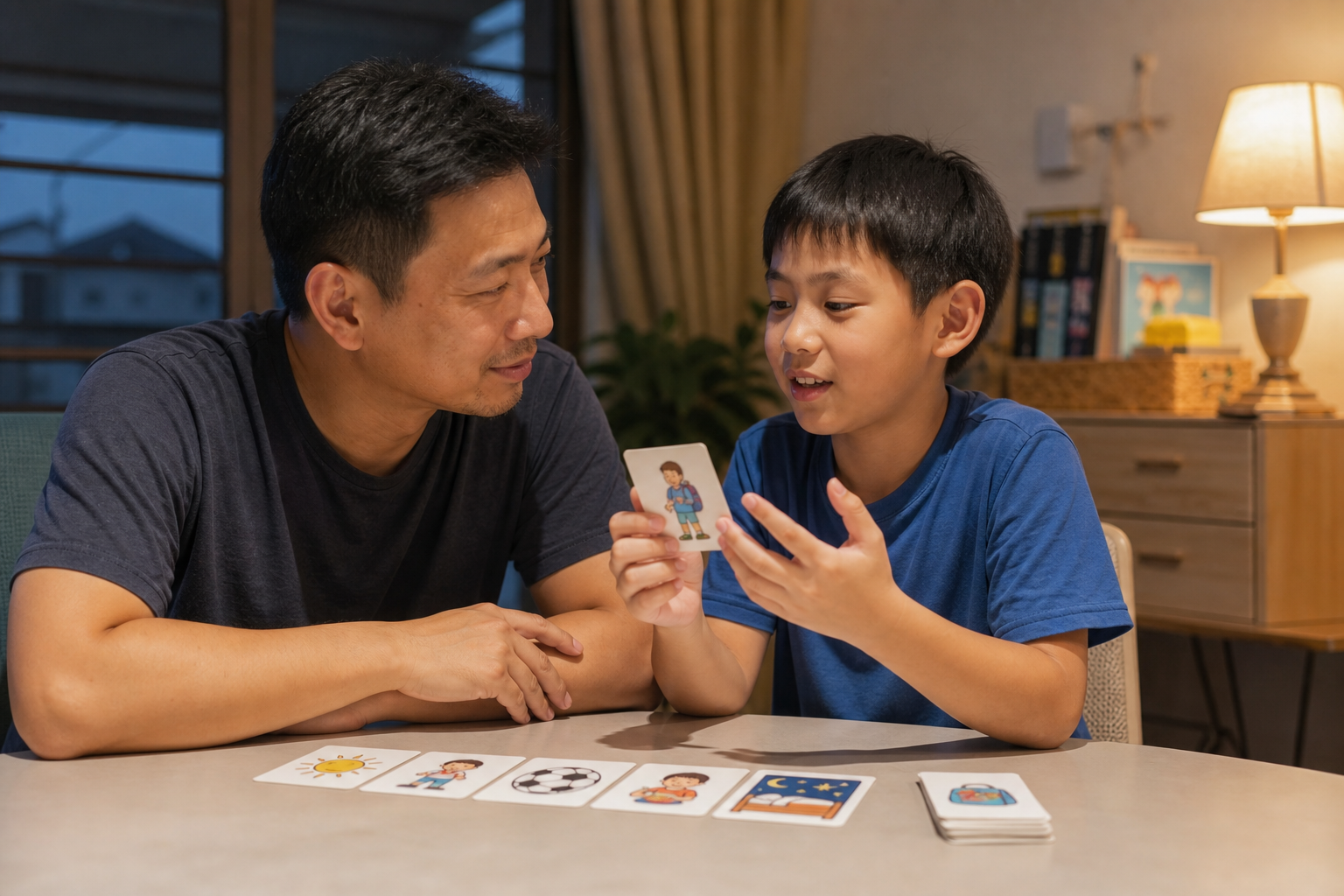
5. Let the child explain in the language that carries meaning
The UNESCO multilingual education guidance fits many Malaysian homes. A child may understand a science idea faster in Mandarin, Malay, Tamil, or a home dialect, then write it in English. I have seen parents relax when they stop forcing polished sentences too early. Meaning first, language polish second, usually gives memory a firmer base.
6. Add movement after tuition
The WHO physical activity fact sheet notes that physical activity supports well-being. For study time, movement can be tiny: stand, tap card one, say it, sit, recall. This gives restless energy a job. For Danish, movement was not a reward after work; it was part of how he came back to focus.
7. End with sleep instead of one more battle
The CDC sleep guidance connects sleep with attention and memory. When a school night gets late, one more angry round rarely helps. We asked Danish’s mother to stop after one successful recall, even if the page was not perfect. The next evening began with less resistance, which mattered more than squeezing out one tired answer.
If natural ways to improve focus and memory brought you here, choose one routine for the next seven days: five picture cards, two-step instructions, or explain-back after reading. Parents who want guided help can contact Genius Mind Academy through the contact page. The best routine is the one your child can repeat without feeling small.