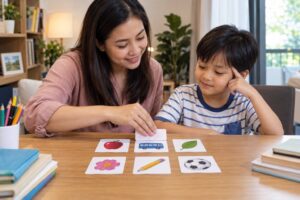
improved memory and brain health is a phrase I would translate carefully for Malaysian parents. On 29 August 2026, I wrote it beside a familiar Petaling Jaya learning-centre conversation: a mother said her Standard 5 son could remember football scores but forgot the BM comprehension point he had just read. I am using a privacy-safe composite I call Haris, a Selangor child who hears English at school, Malay with grandparents, and Mandarin phrases from classmates.
This article was written with the assistance of an AI writing program to help organize information clearly. This image was created using an AI image creation program. Haris is not a private student record; the public Genius Mind Academy feedback I can verify includes May Lee, Mr. Chow, and Christina on the public parent testimonial page, plus Brunei and Keningau student sharing on the public student testimonial page. I am writing about learning habits, not medical advice or promised exam results.

Improved Memory and Brain Health: 7 Positive Habits for Kids
When parents ask about improved memory and brain health, I avoid supplement-style promises. In a school-night setting, I mean habits that make attention, recall, comprehension, and confidence easier to practise. The Harvard Center guide to executive function explains executive function as skills used for planning, focus, and managing information. That is a useful frame for homework because it keeps the focus on trainable routines.
Malaysia adds its own pressure. Families still say UPSR and PT3 in conversation, older siblings prepare for SPM, and the KPM academic calendar page shows how full the academic year can feel. Genius Mind Academy’s learning approach works best when the parent sees a small routine, repeats it kindly, and notices progress before marks become the only measurement.
Families who want structured guidance can explore Genius Mind Memory Games, the 90-minute Brain Activation Class, or the memoHACK Trial Class page. At home, though, the routine must survive traffic, dinner, tuition, and the child’s tired face at 9 p.m.
1. Begin improved memory and brain health with five clear pictures
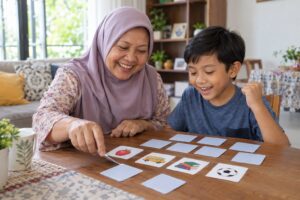
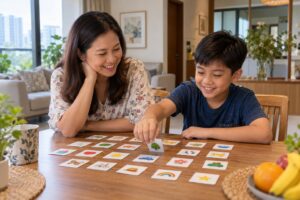
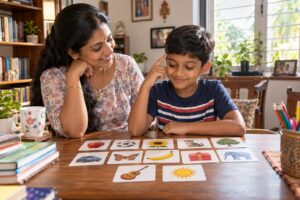
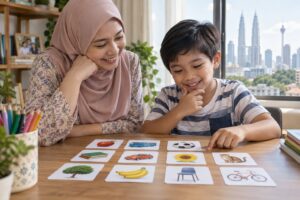
For improved memory and brain health at home, I like five picture cards: apple, bus, key, flower, and fish. Show them for twenty seconds, cover them, then ask the child to rebuild the order. Haris first remembered three. His mother smiled at the three before correcting the two, and that changed the mood of the table.
2. Turn recall into a small story
A story gives memory a path. The apple rode the bus, found a key, opened a garden gate, and saw a fish pond. It was silly, but it gave Haris hooks to pull the order back. Children often need connection before repetition.

3. Use retrieval before more rereading
The Retrieval Practice guide explains why pulling information back to mind matters. After a short Science paragraph, close the book and ask for two remembered ideas. If only one appears, give a clue. My early mistake was making children reread until they looked busy, then wondering why the answer still disappeared.
4. Let home language carry meaning first
The UNESCO multilingual education guidance is relevant in Malaysian homes. If a child understands in Malay, Mandarin, Tamil, Cantonese, or English first, let that meaning settle. Haris sometimes explained the idea in Malay, then shaped the English sentence. That was not laziness; it was a bridge.
5. Add movement without losing calm
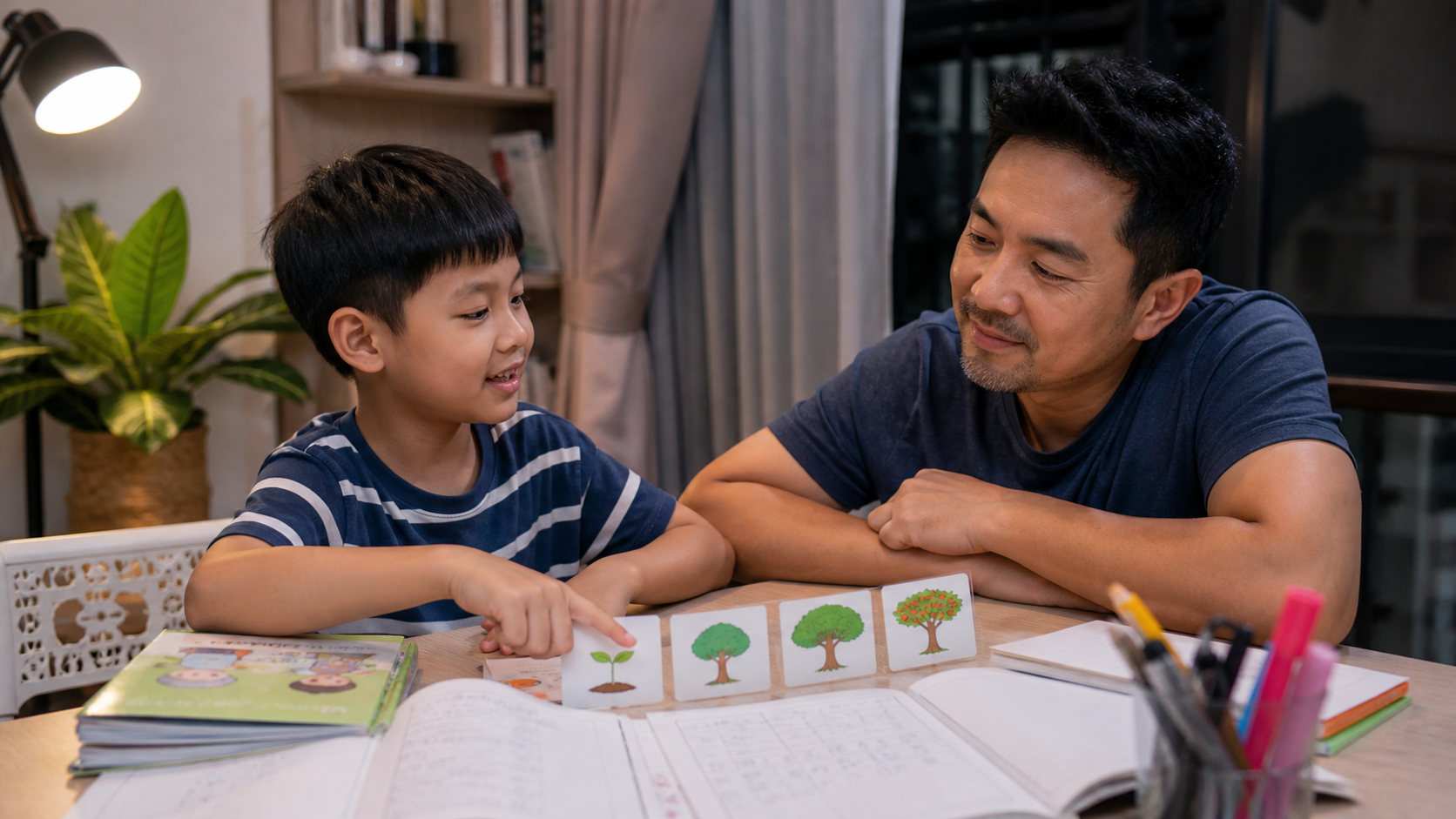
The WHO physical activity fact sheet connects movement with health and well-being, and in study time movement can stay small. Stand, point to card one, say it, step back, and recall. A restless child may not need another warning; the body may need a useful job.
6. Teach the child to notice their own method
The Education Endowment Foundation metacognition summary describes planning, monitoring, and evaluating learning. I ask a child, “What helped you remember this time?” Haris said, “The bus story.” That one sentence gave his mother a method to repeat instead of another scolding to avoid.
7. Protect sleep before the final round
The CDC sleep guidance connects sleep with attention and memory in daily life. I have learned not to chase one more perfect round when the child is already fading. Stop with one accurate recall, write it down, and let tomorrow begin with less resistance.
If improved memory and brain health brought you here, start with five cards and one kind voice for seven days. Parents who want a guided plan can contact Genius Mind Academy through the contact page. Keep the practice short, visible, and respectful enough that your child still wants to try again.