
activities to improve memory in elderly families became today’s second topic after I thought about a Petaling Jaya grandmother I will call Auntie Mei, a privacy-safe composite of older Malaysians who help supervise homework while parents work late in the Klang Valley. Her family did not want medical promises. They wanted warm routines that let grandmother and grandchild remember, talk, and enjoy each other.
This article was written with the assistance of an AI writing program to help organize information clearly. This image was created using an AI image creation program. For verifiable Genius Mind Academy feedback, I point families to the public parent reviews and public student testimonials; this article is educational family guidance, not medical advice.
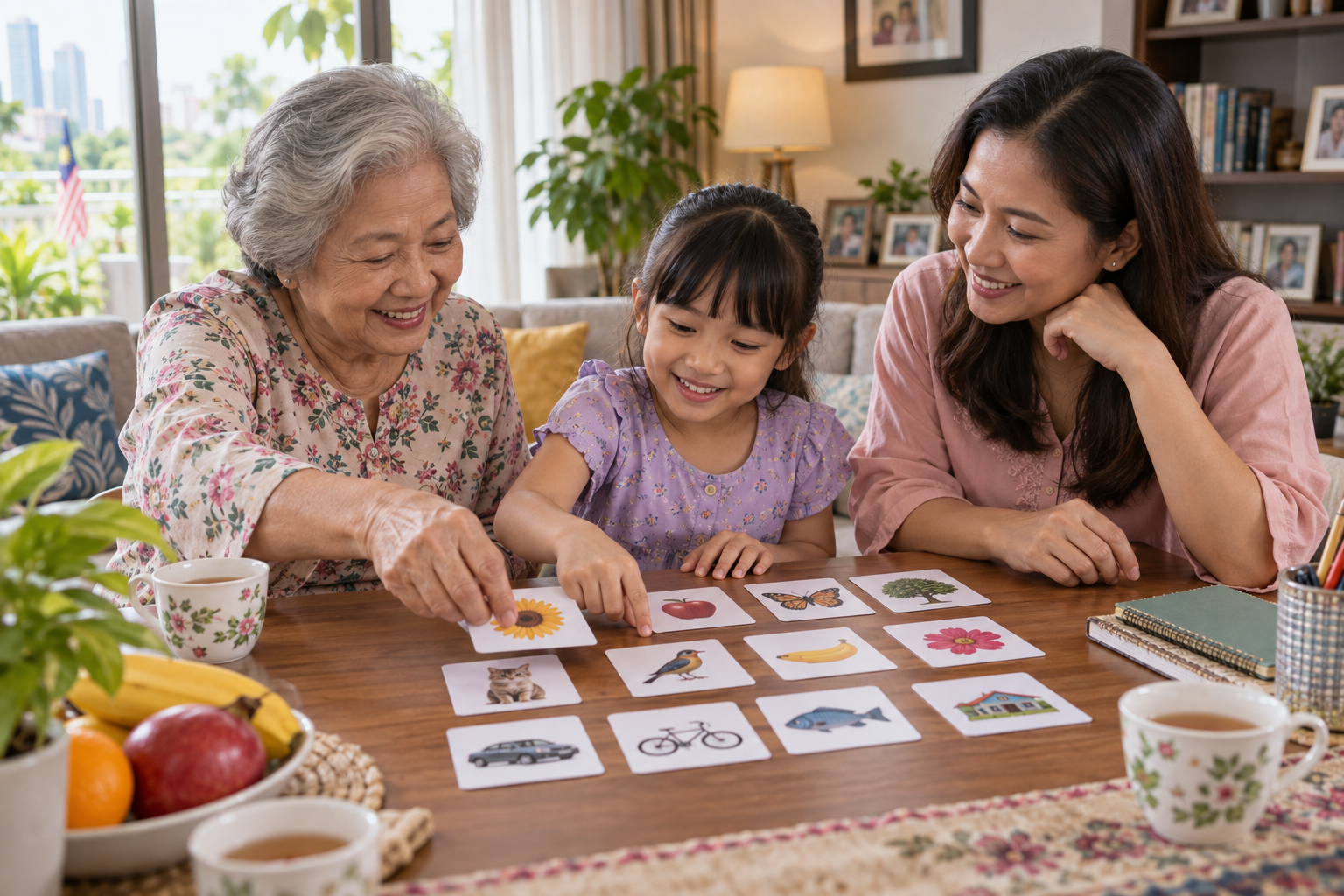
Activities to Improve Memory in Elderly: 9 Warm Family Ideas
Parents searching for activities to improve memory in elderly family members often carry two hopes at once. They want older parents to stay socially engaged, and they want children to learn patience, listening, and respect. In Malaysian homes, this can happen around a dining table after school, during weekend visits, or before a child starts UASA or SPM revision.
Genius Mind Academy supports focus, memory, comprehension, confidence, and learning habits. While GMA mainly supports children through focus, memory, comprehension, confidence, and learning habits, families can adapt the same gentle structure at home with GMA memory games, the brain activation class, and the MemoHack trial class. Keep activities to improve memory in elderly relatives friendly, voluntary, and pressure-free.
The National Institute on Aging cognitive health guide notes practical areas families can discuss with health professionals, including activity, connection, and brain health habits. The Harvard Center on the Developing Child executive function guide also reminds us that planning, attention, and working memory are skills used across life. I use those ideas carefully: family games can support engagement, but they are not medical care.
1. Begin activities to improve memory in elderly with family photo stories
Open a photo album and choose three pictures. Ask grandmother to tell one small detail, then let the child ask a gentle follow-up question. Auntie Mei remembered the wet market near SS2 first, then laughed when her grandson asked what snack she bought after school.
This is one of the warmest activities to improve memory in elderly family routines because the older person leads with lived experience. The child learns that memory is not only exam recall; it is also story, identity, and relationship.

2. Use picture cards instead of quizzes
Lay out six simple picture cards: flower, bus, apple, house, bird, tree. Ask everyone to choose two and make a tiny story. Avoid “Do you remember or not?” because that can feel like a test.
The spacing and retrieval explainer supports low-stakes recall over repeated rereading. At home, low-stakes means smiling, helping, and letting the older adult pass if a card does not spark anything.
3. Pair home language with school language
Auntie Mei told stories in Cantonese, her daughter translated parts into English, and the child repeated one sentence in Bahasa Melayu. The UNESCO multilingual education note is a helpful reminder that familiar language can support meaning before formal wording.
For children, this becomes a listening exercise. For older adults, it keeps the conversation natural instead of forcing one “correct” language.
4. Make a recipe sequence
Choose a familiar food such as nasi lemak, curry noodles, or kaya toast. Ask, “What comes first?” Then put picture cards or real ingredients in order. The goal is sequence, conversation, and shared attention.
Activities to improve memory in elderly relatives should feel connected to real life. Food memories are often rich because they include smell, movement, family roles, and routine.

5. Add a safe movement path
Place four picture cards on the floor with enough space to walk safely. A teenager can step through the route while the grandparent calls out the order from a chair. The WHO physical activity fact sheet gives the wider health context for activity, but families should keep movement suitable for the person’s comfort and ability.
This can be adapted easily. If walking is not comfortable, use finger pointing on the table. The memory route still works.
6. Let the child become the recorder
Ask the child to draw or write one remembered detail after the conversation. Grandmother might say, “The bus was blue,” and the child draws a bus. This gives the child a job and shows the older adult that the story mattered.
It also builds respect. Many Malaysian children live near grandparents but rarely ask about their school days, kampung memories, or early working life.
7. Keep review short and predictable
Use five to ten minutes, then stop. The KPM academic calendar can help parents choose calmer weekends instead of squeezing family practice into exam-night stress. Predictable routines are kinder than sudden long sessions.
Activities to improve memory in elderly family settings should leave people feeling closer, not inspected. If the mood drops, pause and return another day.

8. Connect the routine to the child’s learning
After the family story, ask the child, “How did you remember the order?” The answer might be colour, place, sound, or emotion. Those same strategies can support school topics later.
This is where Genius Mind Academy thinking comes in: focus and memory habits are easier to practise when children see them in real family life, not only worksheets.
9. End with thanks, not scores
Close by thanking the older adult for one story and thanking the child for listening. No marks are needed. The win is connection, attention, and one memory route everyone can repeat.
If activities to improve memory in elderly relatives brought you here, begin with photo stories, picture cards, home-language bridges, recipe sequences, safe movement, child recording, short review, school links, and thanks. Families who want child-focused memory support can reach GMA through the contact page, and the Harvard activity guide offers more ideas for practising executive function skills across ages.





