
activities to improve memory and concentration came up for me on 20 September 2026 after a Subang Jaya mother described her Standard 5 son, whom I will call Daniel, staring at a Science page and saying, “I know this, but I cannot start.” Daniel is a privacy-safe composite of Malaysian learners I hear about in GMA parent conversations: bright, busy, bilingual, and easily discouraged when recall and attention have to happen together.
This article was written with the assistance of an AI writing program to help organize information clearly. This image was created using an AI image creation program. For verifiable Genius Mind Academy feedback, I point families to the public parent reviews and public student testimonials; this article shares educational routines, not medical advice.
Activities to Improve Memory and Concentration: 9 Calm Wins
Parents searching for activities to improve memory and concentration often want a peaceful answer, not another lecture. In Malaysia, a child may move from school to tuition to homework while switching between English, Bahasa Melayu, Mandarin, Tamil, agama work, UASA tasks, PBD evidence, and eventually SPM pressure. A tired child does not need a bigger scolding. The child needs a smaller starting step.
Genius Mind Academy supports focus, memory, comprehension, confidence, and learning habits. Families can explore GMA memory games, the brain activation class, and the MemoHack trial class. I like activities to improve memory and concentration that are short enough for a school night and clear enough for a parent to repeat without turning home into a classroom.
The Harvard Center on the Developing Child executive function guide is helpful because it connects focus, working memory, flexible thinking, and planning. In plain parent language, Daniel needed to notice the task, hold one instruction, recall one answer, and feel safe trying again.
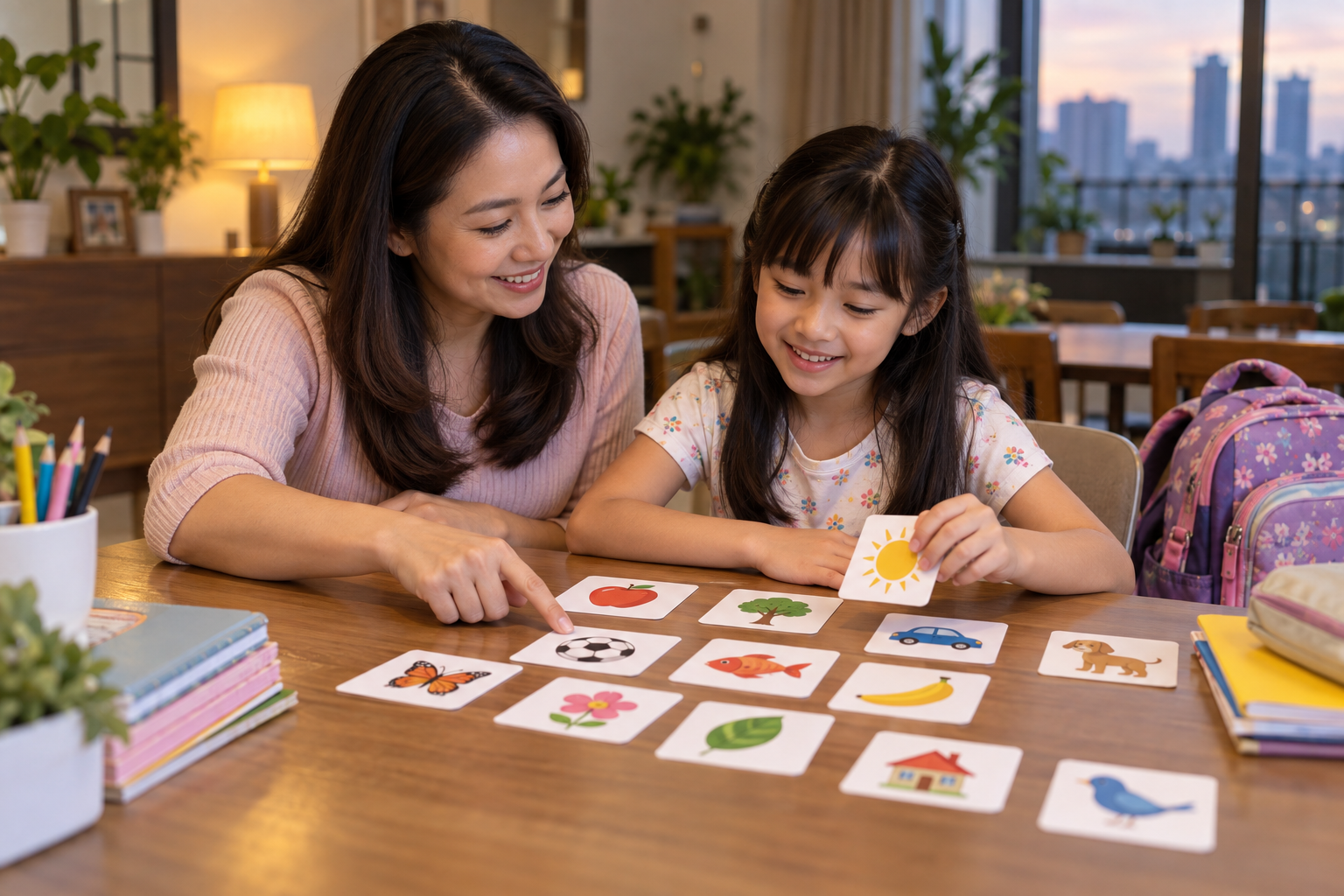
1. Start activities to improve memory and concentration with eight picture cards
Place eight picture cards on the table for twenty seconds. Cover them, then ask the child to name any four. The first win is not perfection. It is the moment the child discovers, “I can bring something back without looking.”
The spacing and retrieval explainer explains why active recall and spacing help learning more than simply rereading. That is why activities to improve memory and concentration should ask for a small retrieval, then give the mind a short pause.

2. Give one job to the eyes
Before the child looks at the cards, say, “Find the things that move.” Now the eyes have a job. Daniel stopped scanning randomly and noticed bus, bird, and bicycle. Attention became easier because the task was specific.
This is useful for comprehension too. Before a BM petikan or English passage, ask the child to look for names, places, or sequence words. Focus improves when the child knows what to catch.
3. Use a two-minute timer
A timer protects the relationship. Instead of “study until you finish,” try two minutes of full attention and one minute of reset. The child can see the end, and the parent can praise effort quickly.
Activities to improve memory and concentration work better when they feel possible. Two calm minutes repeated across a week can beat one angry forty-minute session.
4. Turn the cards into a story route
Ask the child to connect four cards into a tiny story: the bus passed the tree, the bird saw the flower, and the child went home. The story may sound funny, but it gives memory a path.
When school facts feel scattered, a story route can help children organise details before they write. This is especially useful for Science processes and karangan isi penting.

5. Practise bilingual explain-back
Let the first explanation come in the language that feels easiest at home. Many Malaysian children think in a mix of English, Bahasa Melayu, Mandarin, Tamil, or dialect. The UNESCO multilingual education note supports familiar language as a bridge for understanding, so I listen for meaning first and polish school-language wording after that.
Daniel could explain a picture sequence in Mandarin first, then say it in English. The memory was there; he needed a bridge, not pressure.
6. Add one movement reset
After two rounds, stand up, touch the door, come back, and recall one card. The WHO physical activity fact sheet gives the wider health value of movement, and in homework routines a short movement reset can wake attention without turning into playtime chaos.
Keep it safe and tiny. The point is to refresh focus so the next recall has a better chance.
7. Ask the child to teach you
Say, “Teach me how you remembered that.” Children become more aware of their own strategy when they explain it. If Daniel said, “I saw the blue bus first,” I would name the strategy: colour helped you remember.
This builds confidence because the child sees memory as something trainable, not a mysterious talent some classmates have and some do not.

8. Review earlier, not later
The HealthyChildren sleep guide is a useful reminder that rest matters for school-age children. I prefer one short review before dinner or early evening, then a lighter bedtime recap. Late-night panic rarely improves concentration.
Families can check the KPM academic calendar and plan short practice before assessment weeks. The rhythm matters more than a last-minute pile of worksheets.
9. End with one named win
End by naming what improved: “You remembered four cards,” “You came back after forgetting,” or “You explained the sequence clearly.” A named win gives the child a reason to try again tomorrow.
If activities to improve memory and concentration brought you here, begin with picture cards, one eye job, a short timer, story routes, bilingual explain-back, movement, teaching back, early review, and one named win. The Harvard activity guide has more age-based ideas, and Malaysian families who want guided support can contact GMA through the contact page.





