
activities to improve cognition sounded like a big phrase until I thought about a Petaling Jaya parent who told me on 19 September 2026, “My daughter can memorise, but she gets stuck when the question changes.” I will call the child Sara, a privacy-safe composite of Malaysian learners who need flexible thinking, not more fear.
This article was written with the assistance of an AI writing program to help organize information clearly. This image was created using an AI image creation program. For verifiable GMA feedback, I point parents to the public parent reviews and public student testimonials; this article shares educational routines, not medical advice.
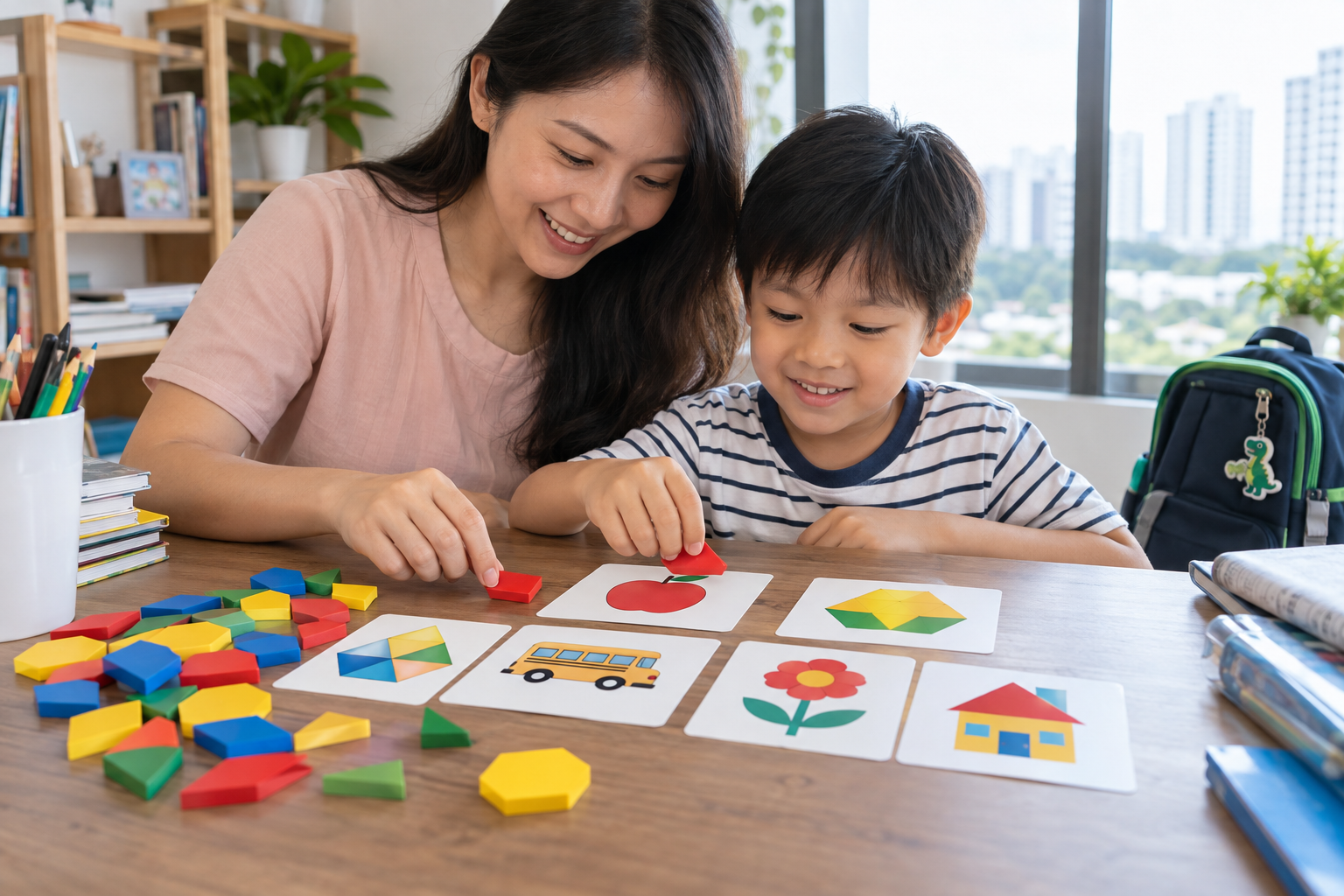
Activities to Improve Cognition: 9 Positive Learning Habits
Parents searching for activities to improve cognition are usually asking a very practical question: how can my child pay attention, understand, remember, shift strategy, and explain an answer when schoolwork changes shape? In Malaysia, that can show up in UASA practice, PBD tasks, bilingual homework, Science process questions, and SPM-style reasoning for older children.
Genius Mind Academy supports focus, memory, comprehension, confidence, and learning habits. Families can also explore GMA memory games, the brain activation class, and the MemoHack trial class. I keep activities to improve cognition concrete because children need something they can touch, move, sort, and explain before abstract thinking feels safe.
The Harvard Center on the Developing Child executive function guide explains executive function skills that help children hold information in mind, focus, and plan. I see the same pattern during class practice: thinking improves when the child has a simple routine for noticing, choosing, and checking.
1. Begin activities to improve cognition with sort and explain
Place picture cards and blocks on the table. Ask the child to sort them by colour, shape, or category, then explain the rule. Sara first sorted by colour, then noticed that bus and car could be transport. That small switch was the learning moment.
This is one of my favourite activities to improve cognition because the answer can change when the rule changes. The child learns that flexible thinking is not failure; it is a useful school skill.

2. Change the rule gently
After one sort, say, “Now make a new group.” A child may move apple and banana from red objects into food. That shift trains attention and self-checking. It also helps the child tolerate a changed instruction.
For Malaysian homework, this matters. A child may know the topic but miss the command word: compare, arrange, explain, choose, or give a reason. Rule-changing practice builds that habit slowly.
3. Ask for an explain-back sentence
After sorting, ask the child to say one full sentence: “I put these together because they are transport.” The retrieval and spacing explainer reminds parents that active recall is stronger than simply seeing the answer again.
Activities to improve cognition should include speaking because the child has to organise thought before sound comes out. The sentence may be simple, but it reveals whether the idea is clear.
4. Use home language before school language
If the child struggles, let the first explanation come in Bahasa Melayu, Mandarin, Tamil, English, or a mixed home language. The UNESCO language and education note is a useful reminder that familiar language can support understanding before formal wording is polished.
Sara could explain a plant sequence in Mandarin first, then shape it into English. The idea was already there. The language bridge helped her show it.

5. Build a simple science sequence
Use cards for rain, seed, sun, water, and flower. Ask what comes first, what changes, and why. The child is not only memorising a row; the child is practising cause, sequence, and explanation.
Activities to improve cognition work best when the child connects pictures to familiar life: a rainy school morning, a balcony plant, or watering flowers before tuition.
6. Add a working-memory challenge
Ask the child to remember two rules at once: “Sort by category, then tell me which group has three cards.” Keep it small. The point is to hold information in mind without panic.
If the child forgets the second rule, repeat calmly. The goal is practice, not a score. Confidence grows when the child can recover.
7. Move through floor cards
Put picture cards on the floor and call a short route: sun, tree, bus. The child steps through the route, then says it back. The WHO physical activity fact sheet gives the wider health value of activity, and movement also gives active children a way to engage attention.
This can be especially useful after school when sitting still has already taken a lot of effort. Keep the path safe and short.

8. Review before bedtime, not at midnight
Choose one thinking routine to repeat before sleep: sort, explain, or sequence. The HealthyChildren sleep guide helps parents think about rest as part of learning, and the KPM academic calendar can help families plan review before busy school weeks.
A calm ten minutes is usually more useful than a tired hour. Activities to improve cognition should leave the child feeling able to try again.
9. Celebrate the strategy, not only the answer
End by naming the strategy: “You changed the rule,” “You checked the group,” or “You explained why the flower came last.” That tells the child what to repeat next time.
If activities to improve cognition brought you here, begin with sorting, rule changes, explain-back, home-language bridges, science sequences, working-memory challenges, movement routes, sleep-friendly review, and one strategy praise. The Harvard activity guide has more age-based ideas, and parents who want guided learning support can reach GMA through the contact page.





