activities to help with memory became today’s topic on 19 September 2026 after I reread a note from a Klang Valley mother whose Standard 4 son could recognise answers on the page but went blank when asked without looking. I will call him Aiman, a privacy-safe composite of Malaysian learners I see in parent conversations about homework, tuition pressure, and children who need gentler recall practice.
This article was written with the assistance of an AI writing program to help organize information clearly. This image was created using an AI image creation program. For verifiable GMA feedback, I point parents to the public parent reviews and public student testimonials; this article is educational guidance, not medical advice.
Activities to Help With Memory: 9 Gentle Family Wins
Parents usually ask for activities to help with memory when revision has become tense. The child reads the spelling list, nods, and then cannot bring the answer back. In Malaysia, that pressure can sit beside Bahasa Melayu karangan, English comprehension, Mandarin or Tamil reading, agama work, UASA practice, PBD tasks, and older siblings preparing for SPM.
Genius Mind Academy supports focus, memory, comprehension, confidence, and learning habits. Families who want guided practice can explore GMA memory games, the brain activation class, and the MemoHack trial class. I keep activities to help with memory small because a tired child often needs one successful retrieval before a longer study session can begin.
The Harvard Center on the Developing Child executive function guide is useful because it connects attention, working memory, and planning. In my own coaching notes, the best change often starts when a child learns where to place attention before being asked to remember.
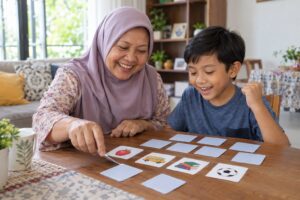
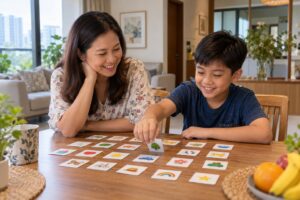
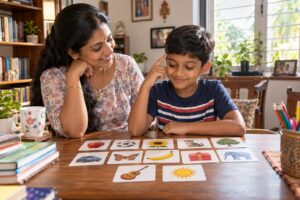
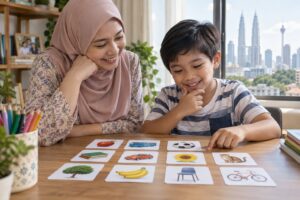
1. Start activities to help with memory with six picture cards
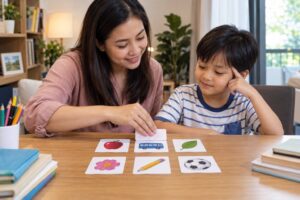
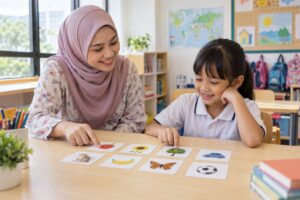
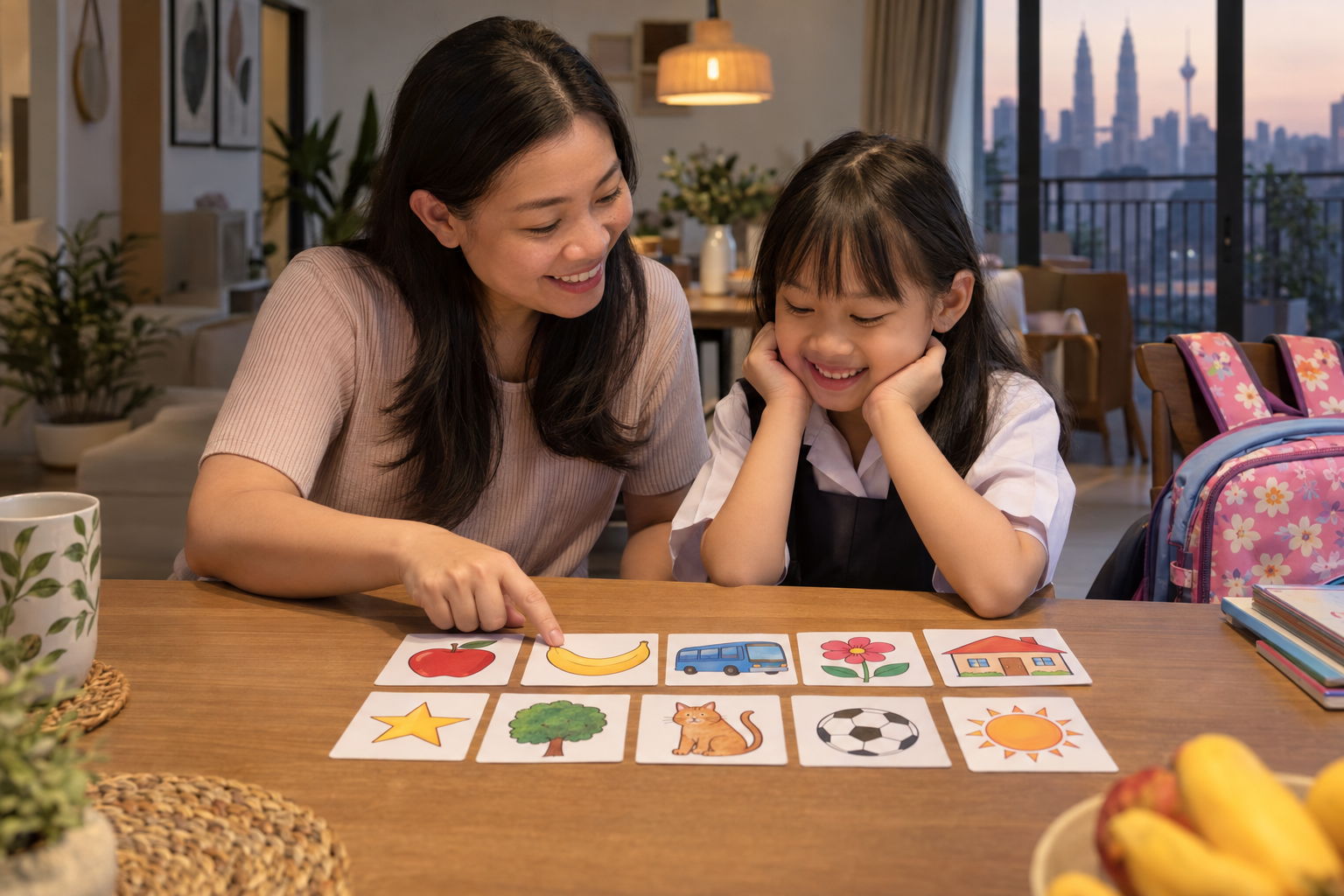
Lay out six picture cards for twenty seconds, cover them, and ask the child to name any three. With Aiman, the first useful moment was not a full score. It was the smile after he remembered apple, bus, and sun without peeking.
Parents sometimes turn the first round into a test. I prefer to ask, “Which picture stayed in your mind first?” The retrieval and spacing explainer explains why bringing an answer back is different from rereading it. That is why activities to help with memory should include recall, not only exposure.

2. Put the cards into a tiny story
A child may remember more when the cards are linked: the sun came up, the bus went to school, and the flower was near the gate. The story can be silly or plain. What matters is that the child has a path to follow.
This helps with school topics too. A Science process, a BM isi penting list, or a moral education example becomes easier when the child can see a beginning, middle, and end.
3. Cover one card at a time
Instead of hiding everything, cover one card and ask what is missing. Then cover two. This makes the challenge feel possible. When a child feels safe enough to guess, memory practice has room to work.
Activities to help with memory are strongest when they stretch the child without embarrassing the child. A small covered-card game can do that in five minutes after dinner.
4. Use bilingual explain-back
Ask the child to explain the story in the language that comes naturally first. In many Malaysian homes, that may be English mixed with Bahasa Melayu, Mandarin, Tamil, or dialect. The UNESCO language and education note supports familiar language as a bridge for understanding, so I listen for meaning before polishing the school-language answer.
This matters because some children are not forgetting; they are translating and recalling at the same time. Separating the two steps reduces pressure.

5. Add a parent echo
After the child answers, repeat one clear sentence back: “You remembered that the bus came after the sun.” The parent echo tells the child exactly what worked. It also gives one more hearing of the correct idea.
I like this because it feels warm, but it still trains attention. A child hears, says, and retrieves the same idea without being scolded.
6. Draw one remembered detail
Give the child thirty seconds to draw one picture from memory. It can be rough. The drawing gives the hand a job and helps the child notice what was stored clearly.
If Aiman drew the bus first, I would ask, “What made the bus easy?” That question turns a lucky answer into a strategy he can reuse.
7. Build one movement reset
Stand up, touch the door, return to the table, and recall one card. The WHO physical activity fact sheet gives the wider health context for movement, and in a study routine a short reset can bring attention back without a lecture.
Keep it short. Activities to help with memory should protect the child’s energy, not become another reason to argue.
8. Repeat before sleep, then stop early
Review the same cards before bedtime and stop while the child still feels okay. The HealthyChildren sleep guide is a helpful parent read because sleep supports school-age learning and behaviour. In practice, calm earlier review often works better than a late-night push.
Families can use the KPM academic calendar to plan tiny review rounds before assessment weeks. The rhythm matters more than the size of one session.
9. End with one named win
Finish by saying exactly what improved: “You remembered four pictures in order,” or “You tried again after forgetting.” Children remember how practice felt. A named win makes them more willing to return tomorrow.
If activities to help with memory brought you here, start with cards, story links, one covered card, bilingual explain-back, parent echo, drawing, movement, sleep-friendly review, and one named win. The Harvard activity guide has more age-based activity ideas, and families who want support can reach GMA through the contact page.