
activities to help memory came to mind on 18 September 2026 after a Klang Valley mother told me her daughter could answer during revision but went quiet when the teacher asked in class. I will call the child Mei Lin, a privacy-safe composite of Malaysian learners who need retrieval confidence, not more pressure.
This article was written with the assistance of an AI writing program to help organize information clearly. This image was created using an AI image creation program. For verifiable GMA feedback, I point parents to the public parent reviews and public student testimonials; this article shares educational routines, not medical advice.
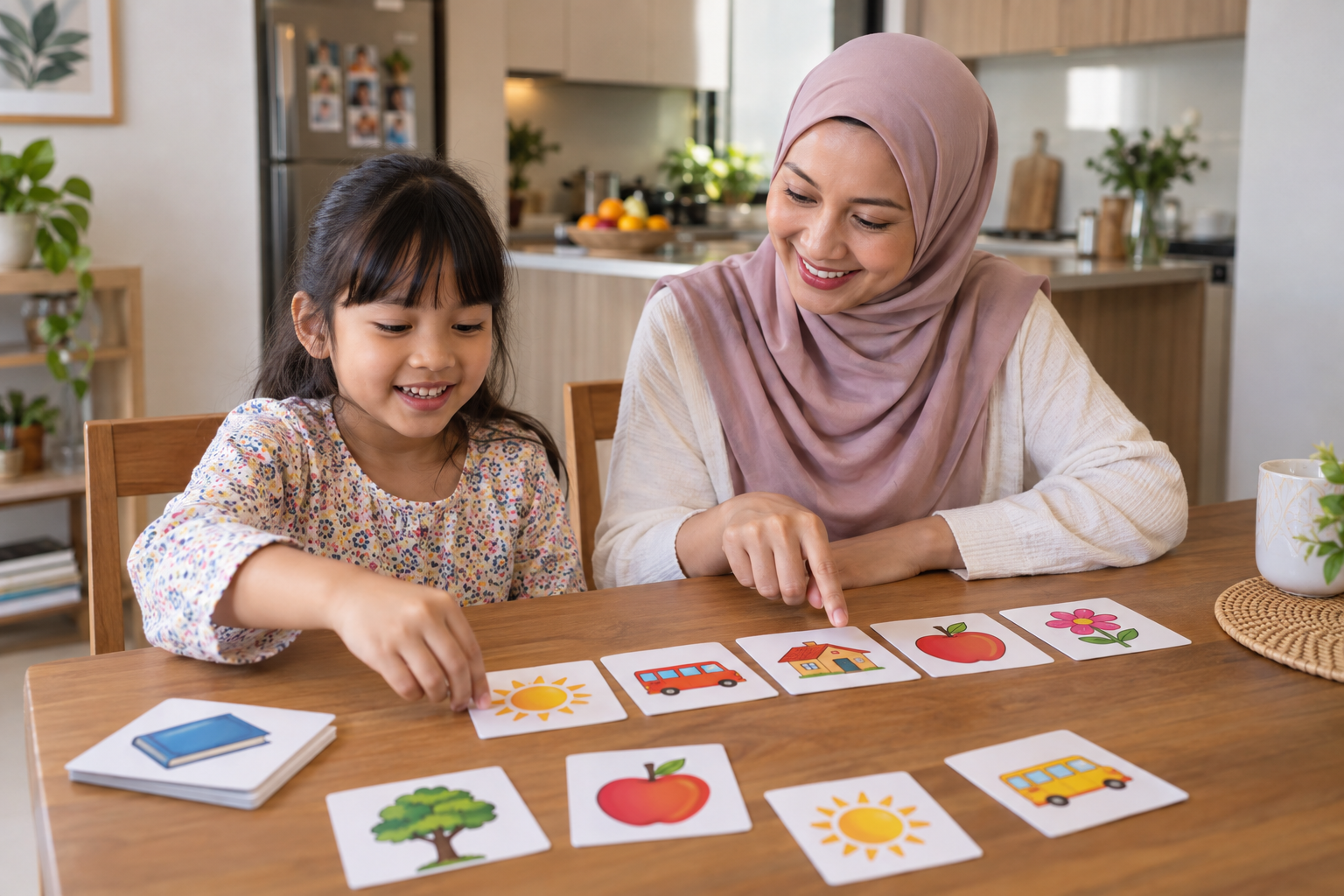
Activities to Help Memory: 9 Calm Parent Routines
Parents often search for activities to help memory when revision looks fine at home but recall disappears in class. In Malaysia, that can happen during Bahasa Melayu spelling, English comprehension, Mandarin or Tamil reading, agama work, UASA practice, PBD tasks, or SPM preparation for older siblings.
Genius Mind Academy supports focus, memory, comprehension, confidence, and learning habits. Families can also explore GMA memory games, the brain activation class, and the MemoHack trial class. I keep activities to help memory practical because the best routine is the one a family can repeat after dinner without turning the table into a battlefield.
The Harvard Center on the Developing Child guide to executive function is a good reminder that attention, planning, and holding information in mind are connected. A child may know the answer, but if the recall moment feels rushed, the answer can hide.
1. Begin activities to help memory with a tiny story row
Choose five picture cards and let the child arrange them into a story: sun, bus, school, flower, home. Ask the child to tell the story once with the cards visible, then once with one card covered. The story gives memory a path to walk.
For Mei Lin, the first win was not remembering every card. It was saying, “The bus came after the sun.” That sentence gave her a foothold. Activities to help memory should create footholds before asking for full answers.
2. Cover one card, not all cards
Parents sometimes make recall too big too quickly. Cover one card first and ask what is missing. If the child answers comfortably, cover two cards. The retrieval and spacing explainer explains why bringing information back matters, but the difficulty still needs to be kind enough for a child to try.
This small step is useful before spelling, Science facts, and moral education points. It teaches the child that forgetting one item is not failure. It is a clue for the next attempt.

3. Let home language carry the first explanation
Ask the child to explain the story in the language that feels natural first. In many Malaysian homes, that may be English mixed with Bahasa Melayu, Mandarin, Tamil, or dialect. The UNESCO language and education note supports the idea that familiar language can help understanding, so I listen for meaning before polishing the school-language answer.
This matters for children who freeze because they are translating and remembering at the same time. Activities to help memory can reduce that load by separating meaning from final wording.

4. Use a parent echo
After the child explains, repeat one strong sentence back: “You said the flower came after school.” Hearing the parent echo a correct idea tells the child what stayed. Then ask the child to repeat it once more.
This is gentle, but it is not passive. The child hears, speaks, and retrieves the same idea in a short loop. For many children, that loop feels safer than being tested cold.
5. Draw one quick picture after recall
After the card round, ask the child to draw one tiny picture from memory. It can be messy. The point is to turn recall into an action. Children who struggle to speak under pressure sometimes show what they remember through drawing first.
When the child draws, ask, “What part did you remember first?” That question helps the child notice their own method. Activities to help memory become stronger when children can name what worked.
6. Add a short movement break
Stand up, walk to the door, return, and try one more card. The WHO physical activity fact sheet gives the bigger health context for movement; at the study table, a short reset can stop frustration from hardening into refusal.
Keep it brief. The goal is not to escape homework. The goal is to reset the body so the mind can retrieve again.
7. Repeat before sleep, but stop early
Review the same story row before bedtime, then stop while the child still feels okay. The HealthyChildren sleep guide explains why sleep is important for school-age children, and in practice I notice that earlier, calmer revision often beats late-night pushing.
Parents can use the KPM academic calendar to plan review before assessment weeks. A small daily rhythm is easier for children than a last-minute marathon.
8. Ask one confidence question
Try asking, “Which card was easiest to remember today?” instead of only “How many did you get?” Mei Lin might answer, “The bus, because I made a story.” Now the parent knows which strategy to repeat tomorrow.
This is why activities to help memory are also confidence activities. When children can explain their own success, they are more willing to try the next round.
9. Keep a weekly review card
Once a week, choose one card or idea that improved. Write the date in a parent notebook, not on the child’s card set, and say the progress out loud. The weekly review makes improvement visible without turning practice into a competition.
If activities to help memory brought you here, begin with story rows, one covered card, home-language explain-back, parent echo, quick drawing, movement, sleep-friendly review, one confidence question, and a weekly review. The Harvard activity guide offers more age-based practice ideas, and families who want support can reach GMA through the contact page.






